

KIEMKRACHT festival
For every seed enthusiast
KIEMKRACHT is a stimulating festival for mouth, stomach, and land, that invites you to seek a new, imaginative relationship with our food. On Saturday 28 February at De Vooruit and at various locations, we playfully challenge you to think critically about what you eat.
We bring together thinkers and doers: farmers, chefs, artists, scientists, and activists. Together we create new, hopeful stories. This time with a focus on seeds.
All events are included in your Kiemkracht day ticket - except the performances 'WOOD' & 'Lacuna Kitchen'. You need to buy a separate ticket for those events.
Kiemkracht is een festival by VIERNULVIER, Velt, Voedsel Anders, Denktank Oikos and Sint-Pietersabdij.
PERFORMANCE
Agenda
-
Isabel Burr Raty
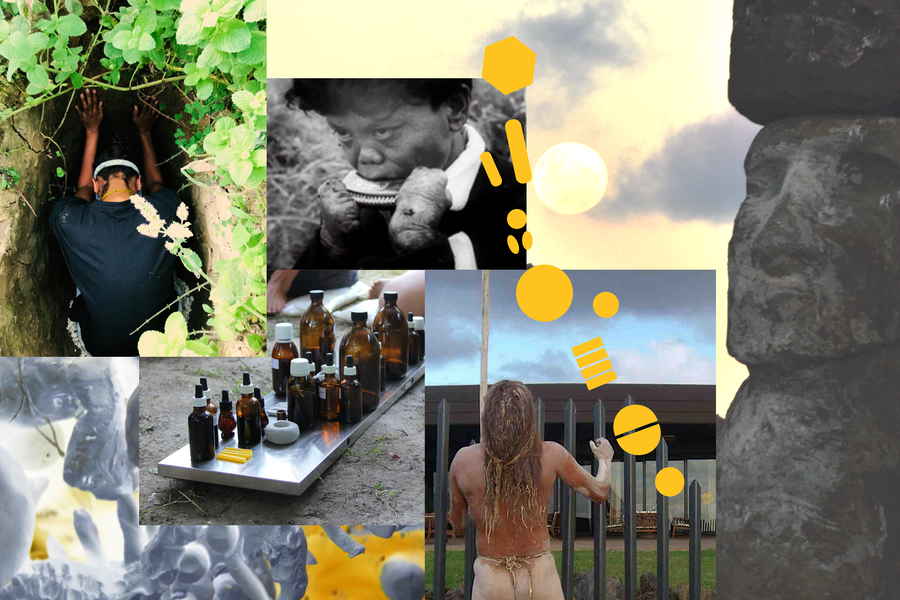
The SpineHow - one - can become a collective earth body?28.02‘The Spine’ is a fascinating research and art project by Isabel Burr Raty that starts from a single powerful concept: the spine of the Earth. The lecture performance draws a link between the spine of humans and that of the earth, holding space for ‘listening’ to the territory.
Burr Raty takes us on the initiatory journey of ‘The Spine’ on Easter Island, a UNESCO World Heritage Site in the middle of the Pacific Ocean. She focuses on the original inhabitants, the Rapa Nui community, who still bear the impact of Chilean colonialism. They see ‘The Spine’ as a tool to unearth spiritual traditions and ancestral knowledge, allowing the project's path to run across their sacred and volcanic lands.
The lecture interweaves geography, history, audiovisual archives, herbal tinctures and ritual research and poses the profound question: How can land art serve as a network for regenerating together?
-
28.02 16:30 - 18:00Past event
-
28.02 16:30 - 18:00Past event
-
-
Afra Tafri Creations / Abhishek Thapar
Lacuna KitchenPop-up restaurant and performance about invisible labour and the hidden stories in our food culture25.02-28.02Lacuna Kitchen by the Indian-Dutch theater maker and storyteller Abhishek Thapar is a sensory theater experience in the form of a unique pop-up restaurant, where the stories behind our food culture are explored. Personal ingredients and untold stories of kitchen workers (including migrant workers, refugees, and individuals with diverse skills) form the basis for a four-course dinner. Lacuna Kitchen demonstrates how food can serve as a bridge between cultures, while also exposing invisible labor and the impact of colonialism on our food culture.
The performance transforms the kitchen into a space for community building and critical reflection, inviting participants and the audience to think about their own role within societal and economic systems.-
25.02 19:00 - 21:45Past event
-
26.02 19:00 - 21:45Past event
-
27.02 15:30 - 18:15Past event
-
27.02 19:00 - 21:45Past event
-
28.02 15:30 - 18:15Past event
-
28.02 19:00 - 21:45Past event
-
25.02 19:00 - 21:45Past event
-
26.02 19:00 - 21:45Past event
-
27.02 15:30 - 18:15Past event
-
27.02 19:00 - 21:45Past event
-
28.02 15:30 - 18:15Past event
-
28.02 19:00 - 21:45Past event
-
-
Robbert&Frank Frank&Robbert
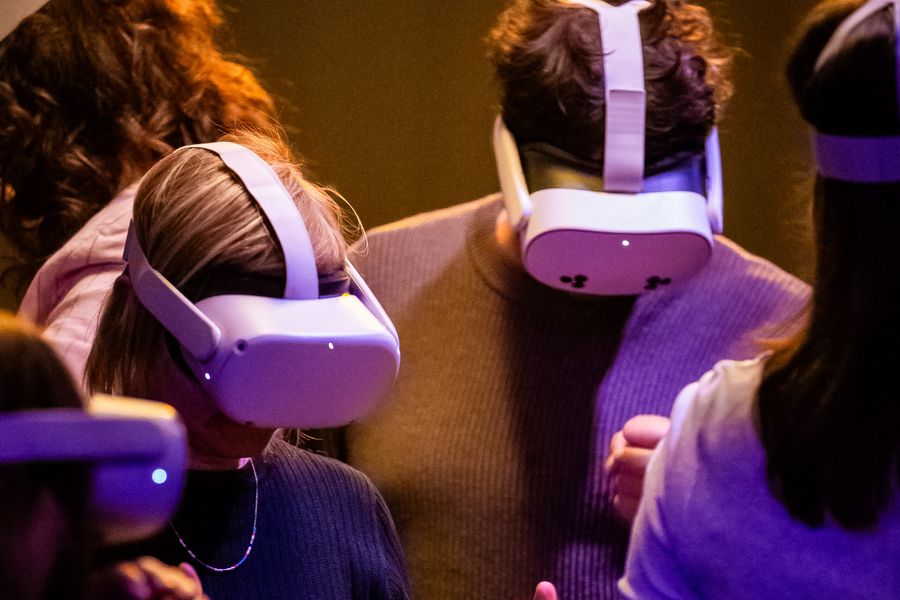
WOODInteractive VR journey of discovery14.02-28.02In the interactive virtual reality performance WOOD, participants embark on a journey of discovery through the field. But beware: nothing is what it seems! Artists Robbert&Frank Frank&Robbert take you on an experience that blurs the line between what is real and what is virtual.
-
14.02 14:00 - 15:30Past event
-
14.02 16:00 - 17:30Past event
-
14.02 18:00 - 19:30Past event
-
14.02 20:00 - 21:30Past event
-
15.02 11:00 - 12:30Past event
-
15.02 14:00 - 15:30Past event
-
15.02 16:00 - 17:30Past event
-
15.02 18:00 - 19:30Past event
-
27.02 14:00 - 15:30Past event
-
27.02 16:00 - 17:30Past event
-
27.02 18:30 - 20:00Past event
-
27.02 20:30 - 22:00Past event
-
28.02 14:00 - 15:30Past event
-
28.02 16:00 - 17:30Past event
-
28.02 18:30 - 20:00Past event
-
28.02 20:30 - 22:00Past event
-
14.02 14:00 - 15:30Past event
-
14.02 16:00 - 17:30Past event
-
14.02 18:00 - 19:30Past event
-
14.02 20:00 - 21:30Past event
-
15.02 11:00 - 12:30Past event
-
15.02 14:00 - 15:30Past event
-
15.02 16:00 - 17:30Past event
-
15.02 18:00 - 19:30Past event
-
27.02 14:00 - 15:30Past event
-
27.02 16:00 - 17:30Past event
-
27.02 18:30 - 20:00Past event
-
27.02 20:30 - 22:00Past event
-
28.02 14:00 - 15:30Past event
-
28.02 16:00 - 17:30Past event
-
28.02 18:30 - 20:00Past event
-
28.02 20:30 - 22:00Past event
-
INSTALLATION
Agenda
-
Laura Palau Barreda
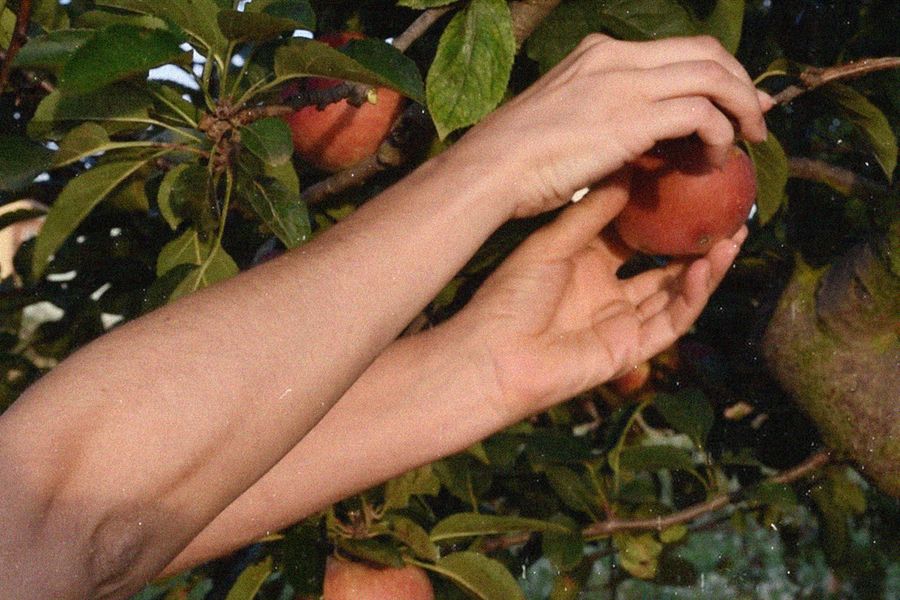
Glass-House, Soft StonesApples and apple trees as living archives28.02The installation ‘Glass-House, Soft Stones’ by Laura Palau, unfolds around the apple as a site of relation, transmission, and political imagination. As a multidisciplinary storyteller, Palau explores how knowledge is acquired, shared, and preserved at the intersection of agricultural practice, embodied knowledge, and cultural memory. Her research approaches the apple and apple trees as living archives, carrying traditional varieties tied to specific recipes, rituals, and stories.
Developed through collaborations with pomologists from Flanders and Catalonia, the project approaches grafting and cultivation as cultural practices that shape how humans relate to nature. Ideas of balance, protection, and vitality are not neutral, but formed through beliefs, habits, and climate, turning acts of care into mirrors of cultural imagination.
Situated at the intersection of agricultural practice, embodied knowledge, and cultural memory, the installation approaches the apple not as a singular object but as a living constellation of gestures, marks, and narratives shaped over time. It considers the apple as a carrier of inherited techniques, shared labour, and contested histories.
The project begins from simple yet persistent questions: what forms of entanglement are produced through acts of protection, control, and circulation? Drawing from l’ensachage des fruits, the practice of bagging fruits to protect them during growth, the installation reflects on how gestures of care are inseparable from regimes of productivism, standardisation, and value. Once, apples bore the faces of monarchs sun-tattooed onto their skins, carrying imperial imagery as evidence of technical mastery and commercial desire. Today, the project asks: who owns the heritage of apples, who narrates it, and under which conditions are they allowed to circulate?
-
28.02 12:00 - 20:00Past event
-
28.02 12:00 - 20:00Past event
-
-
Noor Aburafeh
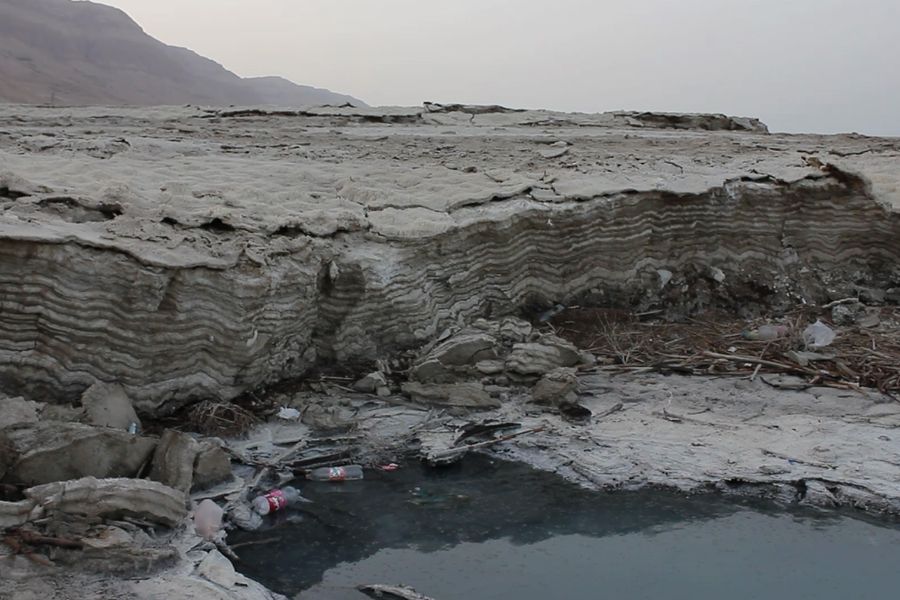
Memory of the SaltFilm about the mythology of salt and its crucial role in famine28.02The film 'Memory of Salt' by Palestinian visual artist Noor Abuarafeh centers on the mythologies surrounding salt and on its history, long intertwined with starvation. Salt has been used to preserve food through scarcity, and was vital during famines—natural or man-made—as in late Ottoman Palestine under British colonialism, and today in Gaza under Israeli genocide.
Footage from the Dead Sea in Jericho, Palestine, is interwoven with archival fragments. A lullaby, inspired by Moroccan songs from what was known as The Year of Hunger/The Year of the Locust, draws from a regional literary tradition using promise to call the morning closer.
Sung to children before sleep, these songs soothed their hunger while stones were boiled as a pledge of a future meal.
-
28.02 12:00 - 20:00Past event
-
28.02 12:00 - 20:00Past event
-
-
Dodi Espinosa
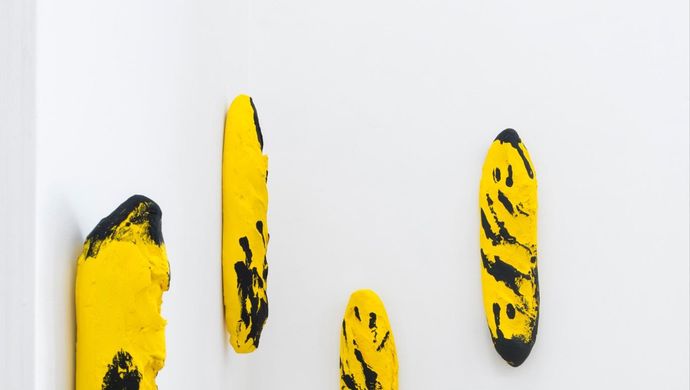
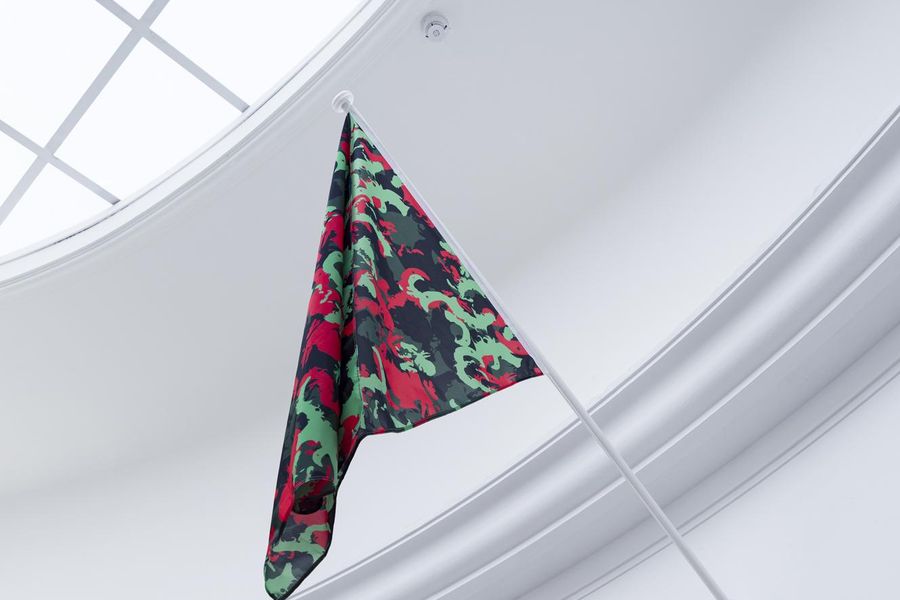
Banana CartographiesWhen will the true, complex story of the banana be as well-known as the fruit itself?26.02-28.02Artist Dodi Espinosa explores in his projects the banana as an important key to the history of world trade, colonial politics, and ecological vulnerability. Although the banana is the world's most traded fruit and seems like an everyday product, it carries a heavy geopolitical history.
In his work, Espinosa poses the sharp question: “What does it mean that a banana crosses a border more easily than a human?” He uses the iconic yellow and black color palette of the curved fruit to play with camouflage, geography, and power structures, but also to expose the absurdity of world trade.
At the same time, he points to the current threat to the Cavendish banana, which is being affected by a new fungal variant, a warning about the broader social and ecological fragility of our time.
Espinosa’s work challenges us to think: when will the true, complex story of the banana be as well-known as the fruit itself?
-
26.02 10:00 - 28.02 22:00Past event
-
26.02 10:00 - 28.02 22:00Past event
-
-
La S Grand Atelier / Irène Gérard & Michiel De Jaeger
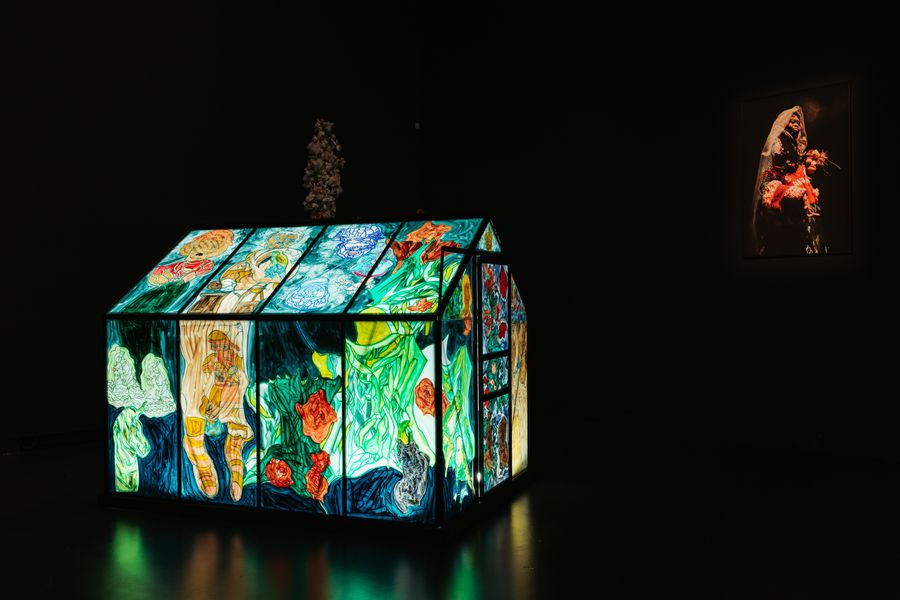
Mes ami·e·s rosesColourful conservatory as a protective universe23.02-28.02'Mes ami·e·s roses' is a poetic project by Irène Gérard and Michiel De Jaeger, born from their close friendship that developed in the studios of La S Grand Atelier in Vielsalm. In a glass greenhouse, they painted with acrylics a warm, protective universe, a place to collaborate in a cocoon of people and memories that are dear to them.
The work is a colorful tribute to the figures who have shaped their world: great icons from French chanson, the deceased mother of Irène, and artists from the La S community. Like stained glass windows, the scenes tell a layered story: characters stand in a dream garden full of roses, rocks, animals, and a mysterious Chinese palace.
At the center stands Françoise Hardy, Irène's great idol, as the guardian of the temple. Familiar faces also appear: from fellow artists and residents to the dog Bibi and even the Belgian royal family. A disarming, personal, and beautifully visual universe.
The installation has borrowed its title from the poem below.
Mes ami.e.s roses
Les Roses retiennent mes ami.e.s,
Mes Roses se souviennent des ami.e.s.Les roses dans l'ombre sont tenues par les ami.e.s,
Mes ami.e.s gardent mes roses à l'ombre,Les roses dans la lumière restent debout,
Mes ami.e.s sans ombre sont partout...Pour toujours les roses sont retenues,
Mes ami.e.s. se rappellent les choses des roses...-
23.02 10:00 - 28.02 22:00Past event
-
23.02 10:00 - 28.02 22:00Past event
-
TALKS
Agenda
-
Gezonde bodems, gezonde producten, gezonde mensen
met o.a. bodemecoloog Emilia Hannula en professor Daan van Brusselen28.02A soil that is teeming with life is the key to the health of both people and the planet. Everything is interconnected in the soil food web: a living soil produces healthy crops and provides resilience against climate disruption. It strengthens biodiversity, also in our guts, which boosts our own resilience.
Those who take good care of the soil take care of everything that lives. The soil is not only beneath our feet but is also within us. That is why toxins such as pesticides are so harmful to both people and the planet.
At Kiemkracht festival, we will discuss this topic with soil ecologist Emilia Hannula and pediatric infectious disease specialist at ZAS Hospitals & UAntwerp Daan Van Brusselen.
-
28.02 16:30 - 17:30Past event
-
28.02 16:30 - 17:30Past event
-
-
Handen af van onze zaden!
met o.a. Million Belay, Paul Grabenbergen en bioboer Lien Vrijders28.02The one tomato or leek is not the other. And everything starts with the seed. Is it owned by multinationals, where profit takes precedence over taste, nutritional value, and biodiversity? And thus tailored to the industrial agriculture model in which farmers must buy expensive, hybrid seeds every year?
Or do we choose for open-pollinated, freely available varieties: seeds without patents, in the hands of agro-ecological farmers and their communities? This way, we preserve the freedom to improve seeds ourselves, adapted to local conditions – as a basis for a fair and resilient food system.
At the Kiemkracht festival, we will engage in conversation with member of the IPES-Food panel, co-founder and general coordinator of the Alliance for Food Sovereignty in Africa (AFSA) Million Belay, Paul Grabenbergen, and organic farmer Lien Vrijders, founder of the Grassroots Climate Farm.
-
28.02 15:00 - 16:15Past event
-
28.02 15:00 - 16:15Past event
-
-
Tables full of flavours and stories
Speeddates Ghent University students28.02All over the world, food is intimately connected to who we are. Our communities are shaped by what we eat, how we prepare it and with whom we share it. Food connects us to the generations that came before us. The way we eat is both deeply rooted in tradition and constantly changing. Sometimes knowledge is lost. At other times, encounters with other food cultures bring new insights and customs. Daughters from four continents reflect on these shifts and share stories about their food. Their words are accompanied by flavours from their mother countries.
This session is hosted by students from the Master's programme in Nutrition and Food Systems (Ghent University) and the INSPIRA research group.
-
28.02 14:30 - 17:30Past event
-
28.02 14:30 - 17:30Past event
-
-
De toekomst van voedsel: wat staat er op het spel?
met o.a. professor Joost Dessein & boer Justine Dewitte28.02The current agricultural food system is unsustainable. A handful of companies determines what is on our plates: ultra-processed and unhealthy for both people and the planet. They also dictate the agricultural model with scale enlargement, monocultures, and chemical inputs, while their lobbies dismantle laws that protect people and the planet. But it can be different.
Agroecology points the way to a fair, healthy, and resilient food system, supported by both farmers and citizens. This requires courage and collaboration — like the farmer who stands up against oil giant TotalEnergies. How do we build the counterpower together to make this transformation happen?
At Kiemkracht festival, we will discuss this topic with Joost Dessein, associate professor in the Department of Agricultural Economics, and farmer Justine Dewitte from the organic farm 't Goed ter Heule.
-
28.02 13:30 - 14:30Past event
-
28.02 13:30 - 14:30Past event
-
WORKSHOPS
Agenda
-
CANCELLED: Seedsovereignty and Solidarity
Inspiration from Palestinian Resistance and Seed Heirloom28.02Together with seed collectors, we are mapping the world of resistance: wherever people cherish seeds as a form of resistance against occupation, colonisation, genocide and the agro-industrial complex. We invite collectors and sympathisers to share their stories with us, to inspire us and spur us to action. We are inspired by initiatives such as Vivien Sarsour's Palestine Heirloom Seed Library, the Seed Library in South Africa, and Vitaele Rassen, a little closer to home.
-
28.02 17:00 - 18:00Past event
-
28.02 17:00 - 18:00Past event
-
-
Workshop | Zaadvermeerdering terug op het boerenerf en in de moestuin
Waarom en hoe ga ik aan de slag28.02We share our basic know-how from daily practice and provide the necessary theoretical knowledge for growing vegetable seeds. We interact and take a step towards vital and robust crops. Why? Because agrobiodiversity is the basis of a resilient agricultural system and a sovereign food system.
The previous generation of farmers and gardeners have abandoned seed propagation and specialised in their field: growing vegetables. This makes our food system vulnerable. From the organic sector and the basic principles of agroecology in general, we see the value of the cyclical, organic. Our seeds are the starting point and the end point and reflect the challenges throughout the seasons. In the selection process, we can play a guiding role as guardians.
In this workshop, we will teach you the basic know-how you need to get started.
-
28.02 11:30 - 12:30Past event
-
28.02 11:30 - 12:30Past event
-
-
Workshop | Zaden schonen
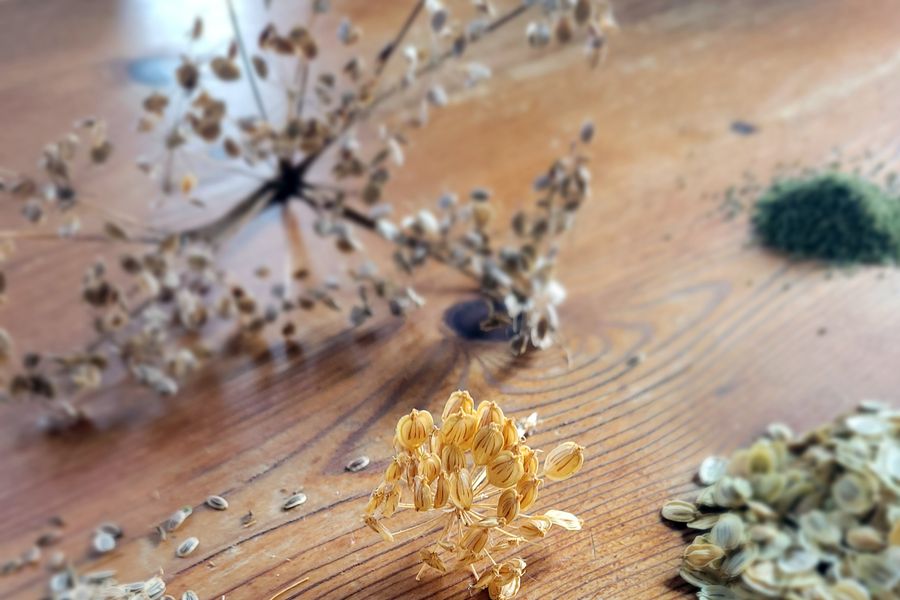
Dorsen, zeven, wannen: we scheiden het kaf van het zaad28.02Threshing, sieving, winnowing: we separate the chaff from the seed. During this workshop, we'll teach how to clean seeds. We work with different types of herbs, vegetables and flowers. You can take a portion of the cleaned seeds home with you afterwards.
-
28.02 11:30 - 12:30Past event
-
28.02 11:30 - 12:30Past event
-
-
Workshop | Oude granen: van bioboer tot bakker
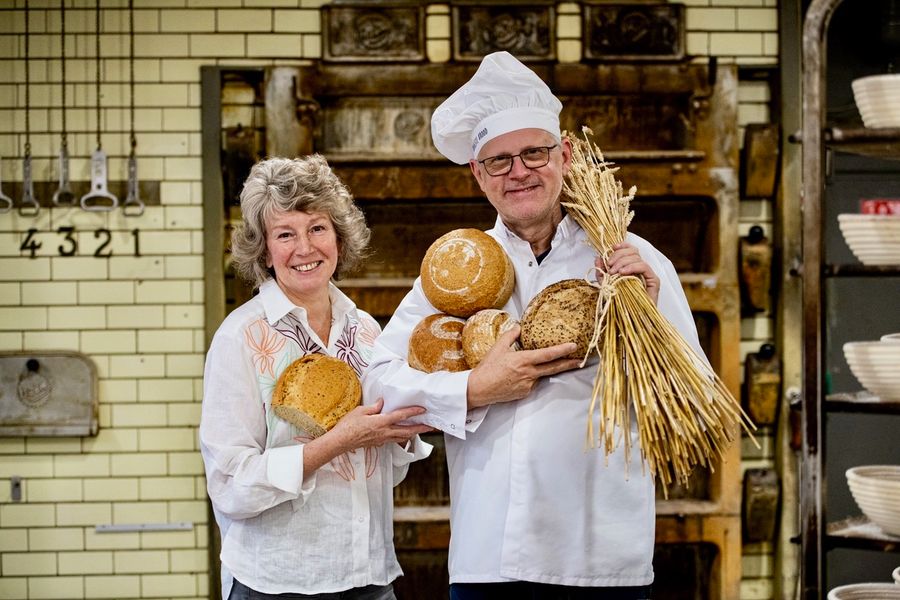
Het verhaal van vergeten granen en traag broodHow do authentic grains obtain new life?28.02Lutgart and Marc from bakery BroodNodig share their passion for ancient grains. They explain how these grains are carefully selected and propagated in collaboration with organic farms as part of The Slowest Bread project.
Learn how authentic grains are being revived and taste the difference.
-
28.02 10:00 - 11:00Past event
-
28.02 10:00 - 11:00Past event
-
-
Workshop | Vlaamse specerijen
Ontdek de intense smaken van wilde zaden28.02Seeds from wild plants often have an intense and unique flavour. However, we are not familiar with their use. Join us during the workshop to discover the treasures hidden in your own environment. It'll be a feast for the taste buds.
-
28.02 10:00 - 11:00Past event
-
28.02 10:00 - 11:00Past event
-
FILM
Agenda
-
Perspectives on Pastoralism
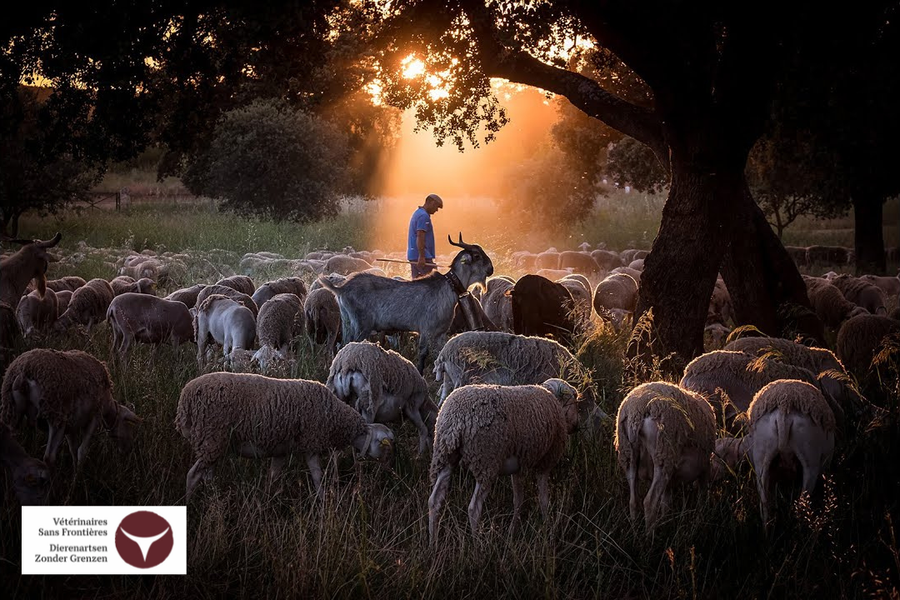
28.02Pastoralism, or nomadic herding, is a form of livestock farming that works in harmony with nature rather than against it. By prioritizing the mobility of their animals, these herders contribute to the preservation of ecosystems and the food security of millions of people.
On the occasion of the International Year of the UN for Pastoralists and Grasslands, Anthony Denayer (Veterinarians Without Borders) will engage in conversation with Flemish herders, accompanied by the screening of a selection of film clips about nomadic herders worldwide.
More information about the film clips
Veterinarians Without Borders supports herding communities in nine African countries and helps them maintain their indigenous knowledge, resilience, and sustainable lifestyle. Their way of life, with low fossil fuel use, can indeed guide us towards a more resilient food system of the future.
Come and discover the intimate intertwining of culture, economy, and ecology that characterizes nomadic herders.
-
28.02 17:00 - 18:30Past event
-
28.02 17:00 - 18:30Past event
-
-
Tussen zout en stijgend water
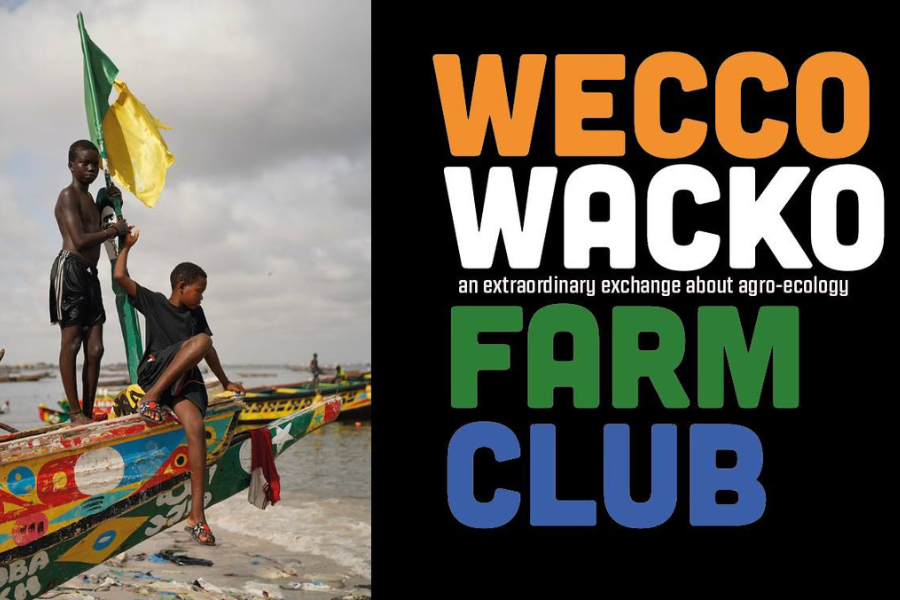
Over klimaatvlucht en veerkracht in Senegal28.02Climate migration will become a hot topic in the coming years. We are already seeing how the salt in the fields and houses underwater in Senegal makes young people doubt their future. After the documentary 'Wecco Wacko Farm Club', which involved Belgian and Senegalese youth, we will engage in a conversation about solidarity and shared challenges.
-
28.02 15:00 - 16:30Past event
-
28.02 15:00 - 16:30Past event
-
-
Anne Reijniers and Eline De Clercq
Gesamthof / A Lesbian GardenA short filmic tour through a lesbian garden where ecology, identity, and feminist history intertwine.28.02This short film talks about the 'Gesamthof / A lesbian garden', an art - nature project in Antwerp between the walls of an old monastery. In this audiovisual time document, we follow a guided tour by Eline De Clercq, the driving force of the garden project. The garden provides an entry point to talk about diverse topics such as colonialism in botany, the ambiguity of naming, the social expectations of women and the search for a lesbian identity. This garden is inspired by the books of ecofeminists and other writers, like Donna Haraway, Robin Wall Kimmerer, Jamaica Kincaid, Virginia Woolf and many others.
Anne Reijniers and Eline De Clercq are both artists and gardeners living in Antwerp. Anne Reijniers is part of the filmmakers collective 'Collectif Faire-Part' and participated in MORPHO's development residency in 2021, situated next to the garden. Eline De Clercq is a painter and rents a studio, also next to the garden.
-
28.02 12:00 - 20:00Past event
-
28.02 12:00 - 20:00Past event
-
-
Fatemeh Towhidlou
Notes on EncounteringA filmic diary of home, diaspora, and uncertainty in motion.28.02This film delves into the exploration of home movies and personal archival material through the lens of non-narrative storytelling. Spanning from September 2022 to December 2023, the film captures the continuous movement in and out of the first house where I had a contract.
As a non- European expatriate, Fatemeh Towhidlou navigates the experience of diaspora and undergoes life-altering social shifts within Iran, all viewed from my current vantage point inside of Europe. Themes of home, belonging and unemployment are interwoven with the complexities of bureaucratic processes, which dictate the permission to reside, work and travel in and out of the country.
-
28.02 12:00 - 20:00Past event
-
28.02 12:00 - 20:00Past event
-
EXTRA
Agenda
-
Back2SoilBasics curates
The mycelium works in mysterious ways28.02This year at Kiemkracht festival, the curatorial team of Back2SoilBasics — Fairouz Gazdallah, Philsan Omar Osman, and Sadaf Malyar — are coming together to explore the worlds of mushrooms, mycelium, and entangled practices.
As a team, they are weaving a collective process: sharing literature, discoveries from social media, passages from books and documentaries, and projects we have come across online. Together, we are mapping connections, ideas, and inspirations — a living archive of our thinking and curiosity.
During the festival, they will create a physical space where you can encounter this process: a glimpse into how our minds, networks, and conversations grow, branch, and interconnect. It is our way of being transparent about the many ideas, artists, and projects that inspire us, even if we cannot feature them all on stage.(UNDER THE MOTHER MUSHROOM,)
They invite you to step into this space with us, to explore, linger, and witness how a curatorial journey unfolds — a collaborative experiment in curiosity, care, and collective thinking.
INTERACTIVE INSTALLATION | Maÿtu collective
Join curator Sadaf Malyar as she guides us into the living, entangled worlds of the Maÿtu collective.
The Maytu collective
Maÿtu is a collective formed by Pedro Riofrio, Corentin Van Mullender, Ugo Danhier, and Anouk Lewkowicz. Their practice blends art, design, and biology, while being strongly influenced by readings in anthropology. Through various projects, they study the growth processes of mycelium and the microscopic mechanisms that drive it phenomena that remain relatively unknown.
Since the meeting of Ugo and Anouk, Maÿtu has been exploring, since 2019, the diverse potentials offered by fungal species collected in Brussels parks and nearby forests. They created their own microbiology laboratory, the Fungal Lab, conceived and built with the specific conditions required for mushroom growth.
Working collectively, in pairs, or individually, Pedro, Corentin, Ugo, and Anouk research different techniques to create new materials and objects. They question various ways of transmitting their research, as well as the inquiries that emerge from their dialogue with these microorganisms (exhibitions, immersive installations, publications, workshops in social centers, the design of pedagogical tools).
Affiliated with the non-profit organisation Fungal Lab, the Maÿtu collective has explored innovative approaches since 2019, using fungi as sources of diverse materials. These fungi, harvested in Brussels parks and surrounding forests, are cultivated under specific conditions, feeding on organic waste to produce a tissue called mycelium. Composed of long cells called hyphae, this mycelium displays chemical properties similar to silk.
Alongside their research on fungal textiles, the collective investigates the use of ceramic containers within their experiments. These containers offer precise control over parameters such as humidity and temperature. The intersection of these two research paths opens multiple perspectives—from creating fungal textiles shaped by the containers to practical applications that aim to democratize these techniques through the widespread availability of clay.
The ontological dimension is also explored, taking into account the current crisis context and the desire to develop a new semiotics aligned with the paradigm shift in contemporary ecology. As artists, the collective seeks to generate new narratives emerging from interactions between living organisms and ancestral techniques, thus developing new artistic practices, production models, and functional design solutions adapted to our present moment.
The stories shaped from their individual experiences belong to the collective, and once shared, new narratives emerge. The rhizomatic model is essential for deconstructing the hierarchical model that often monopolizes the storytelling of our species. Through the use of ceramics, mycelium, and textiles, the collective strives to develop new narratives.
TALK | Making The Invisible Visible: The Food System as the Mycelium
Some lived experiences are less visible than others. Visibility is political. Despite women of colour and indigenous people working the land, cooking the meals, doing the unpaid labour, we rarely see them celebrated and acknowledged in the food spaces. Join us for the talk 'Making The Invisible Visible: The Food System as the Mycelium' where we explore together the many ways throughout history in which women and indigenous people survived, innovated and played with codes against all odds.
We make a parallel between the mycelium growing in impossible places and climates and the marginalised body. What can we learn from the resilience of fungi? What can we learn from the resilience of marginalised bodies within the food system?
EXPO | Under The Mother Mushroom
Sadaf, Fairouz & Philsan take you on their curatorSHIP. Navigating through their research, collection of food memories, artist crushes and random facts about mushrooms and spores.
-
28.02 13:30 - 18:00Past event
-
28.02 13:30 - 18:00Past event
-
-
Seeds for everyone
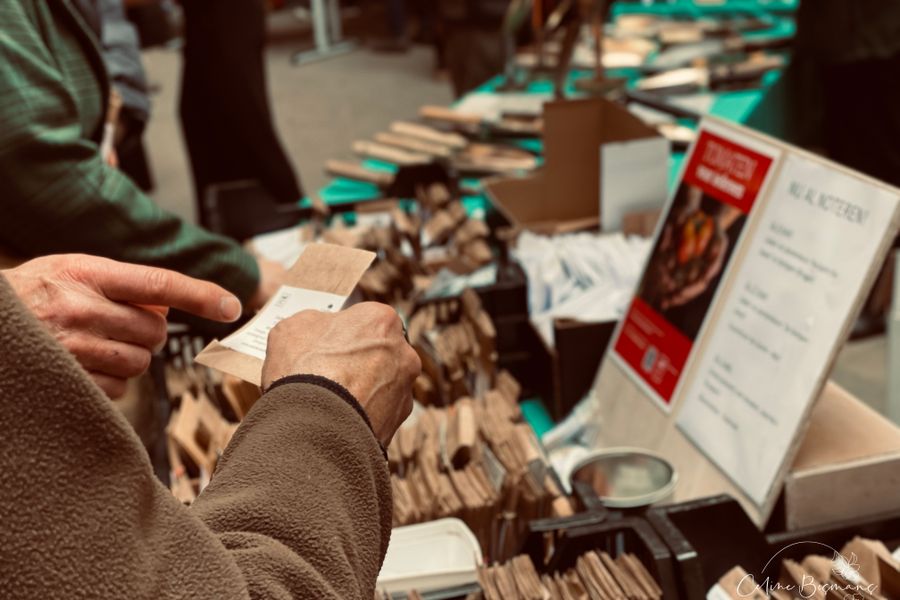
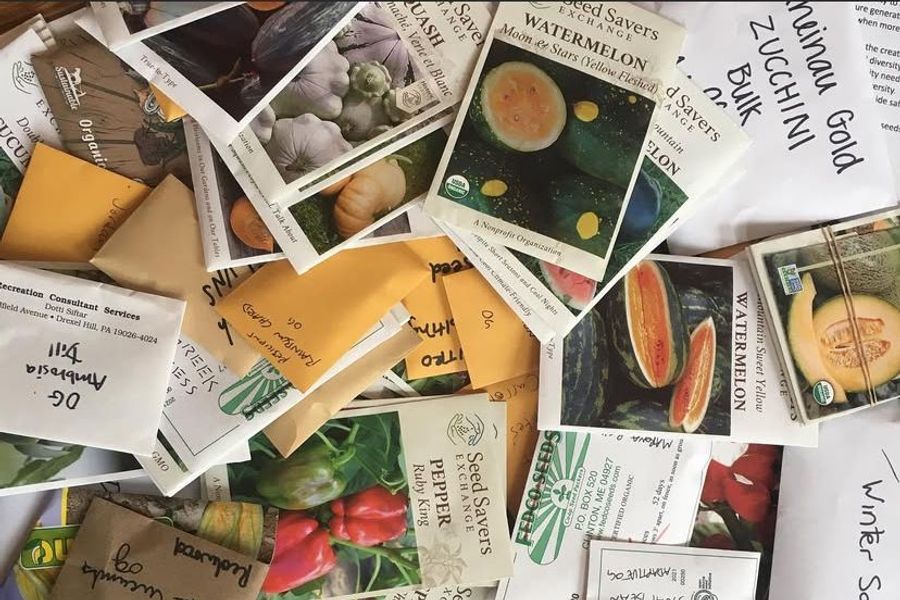
Continuous give and exchange table28.02Are you ready to enrich your (vegetable) garden with unique, strong crops? Then come visit the Seed Working Group Velt! A network of passionate (vegetable) gardeners who primarily grow, collect, preserve, and exchange seeds. They are committed to the preservation and dissemination of heirloom crops. The initiative ‘Seeds for Everyone’ is their effort to make seeds accessible to a wide audience.
They will be available for an entire Kiemkracht day to share their knowledge and experience with seeds, as well as to physically distribute and exchange seeds. Come by and discover nearly 10 meters of seeds to enrich your (vegetable) garden!
-
28.02 13:30 - 18:00Past event
-
28.02 13:30 - 18:00Past event
-
-
Visit to organic flower farm Fleur-Couleur
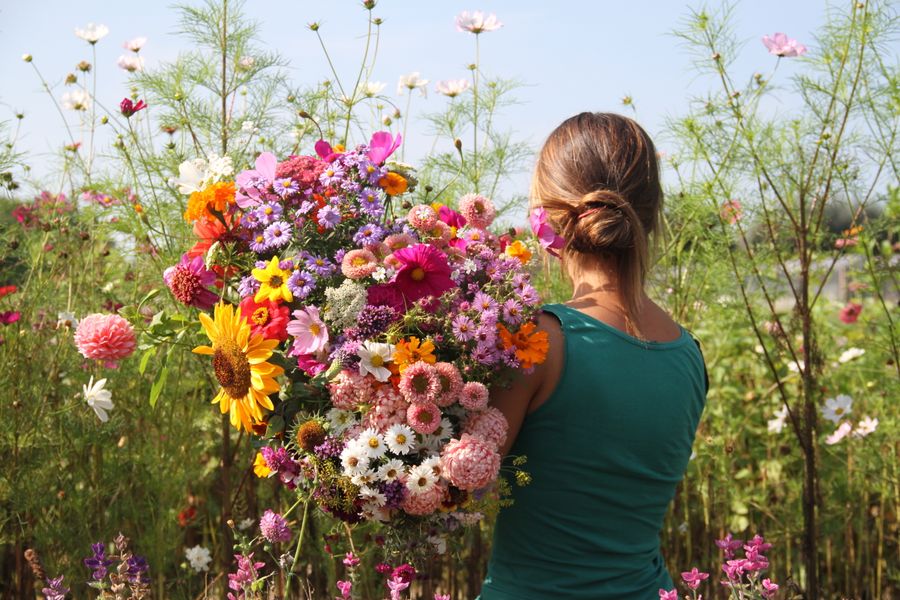
A dive into organic flower cultivationA dive into organic flower cultivation28.02Fleur-Couleur is an organic flower farm. They focus on growing flower seeds, with more than 100 types and varieties! In summer, you are also welcome to come and pick flowers. Everything is grown with passion by farmer Lies and her team, according to the principles of organic farming. The flowers grow and bloom in the field in open ground, following the rhythm of nature. We do all the cleaning, testing and bagging of the flower seeds ourselves.
Be inspired by 'Het Grote Ecologische Pluktuinboek' (The Big Ecological Picking Garden Book). They also work together with Vitale Rassen vzw, an organisation focused on organic, seed-fast seeds from farmers for farmers.
We will meet at 11:00 at the farm (Beekstraat 3, Mariakerke), where farmer Lies and/or Eva will be delighted to share their story with you!
-
28.02 11:00 - 12:30Past event
-
28.02 11:00 - 12:30Past event
-
-
Visit to organic farm De Goedinge
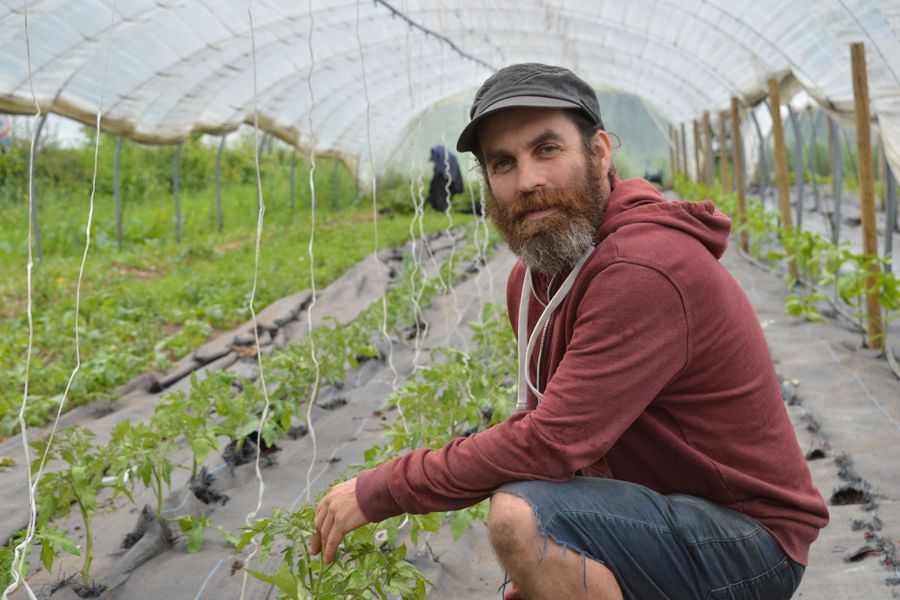
Sowing for the future: public land for local food supply28.02On the grounds of De Goedinge, a CSA (Community Supported Agriculture) farm in Afsnee, more than just vegetables grow. During this company visit, you will discover the role that public agricultural lands can play for a sustainable future.
Farmer Maarten Cools from De Goedinge demonstrates how agro-ecological farming contributes to local food supply, soil care, and connection with the landscape.
-
28.02 10:00 - 12:30Past event
-
28.02 10:00 - 12:30Past event
-
-
Book launch 'Zaaien, Planten, Oogsten'
Jos Van Hoecke28.02Whether you are a beginner or an advanced gardener, you want to sow, plant, and harvest with joy and success. And with respect for nature. Jos Van Hoecke, a former Velt instructor and gardener with a wealth of experience, knows better than anyone how to do that. In the brand new book Sowing Planting Harvesting, he takes you into the garden and shares his best tips from January to December.
'Sowing Planting Harvesting' is a comprehensive book that fully guides the beginner gardener in the ecological vegetable garden. When should you sow? How do you prepare sowing soil? What do you need to know about compost and mulch? How do you deal with unwanted weed growth? And how do you attract diligent helpers like birds and predatory insects to your garden? Additionally, it also provides advanced gardeners with plenty of information. Jos gives you that inspiring push to get started with grafting tomatoes or saving your own seeds. And who knows, you might also feel like building a bicycle wheel bean tower.
During this book presentation, Jos shares his main tips and answers questions from the audience in between. This way, you will go home with answers to your gardening questions. He also introduces you to his other passion: poetry. In the book, several poems have a prominent place. They beautifully express his love for everything that grows and blooms.
-
28.02 10:00 - 11:00Past event
-
28.02 10:00 - 11:00Past event
-
-
The Tender Ears
Broths, fermented liquids and poetry26.02and27.02A mobile kitchen as a part of FOOD x 019 will be hosted by culinary artist Aslı Hatipoğlu on the square in front of Sint-Lucas hospital. On 26.02 and 27.02 in the afternoon.
Culinary artist Asli Hatipoglu will create a place to stand still or to quickly pass by and take something with.
She will serve individual soup potions to have a healing moment from the cold while offering to pack individual wontons wrapped with herbs, roots and fermented foods upon the desire of the person.
You can expect a mobile kitchen with jars of herbs, roots, ferments, sprouts, steaming broths and designed care packages of poetry to take with.-
26.02 14:00 - 18:00Past event
-
27.02 14:00 - 18:00Past event
-
26.02 14:00 - 18:00Past event
-
27.02 14:00 - 18:00Past event
-