


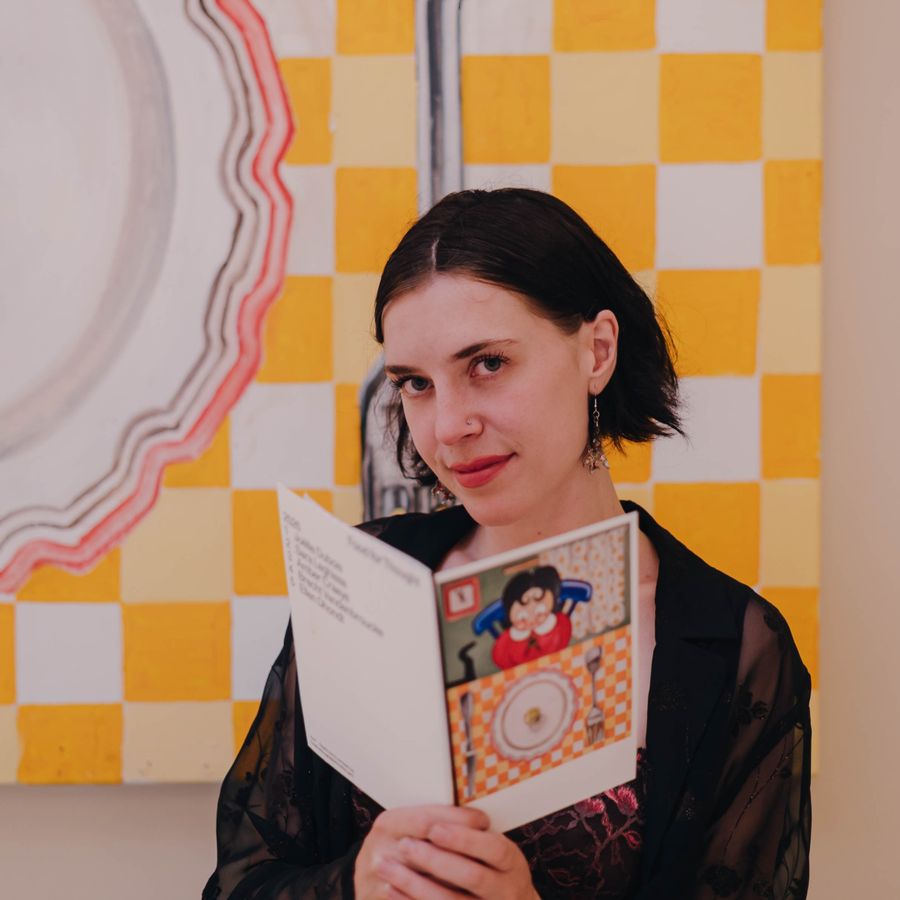
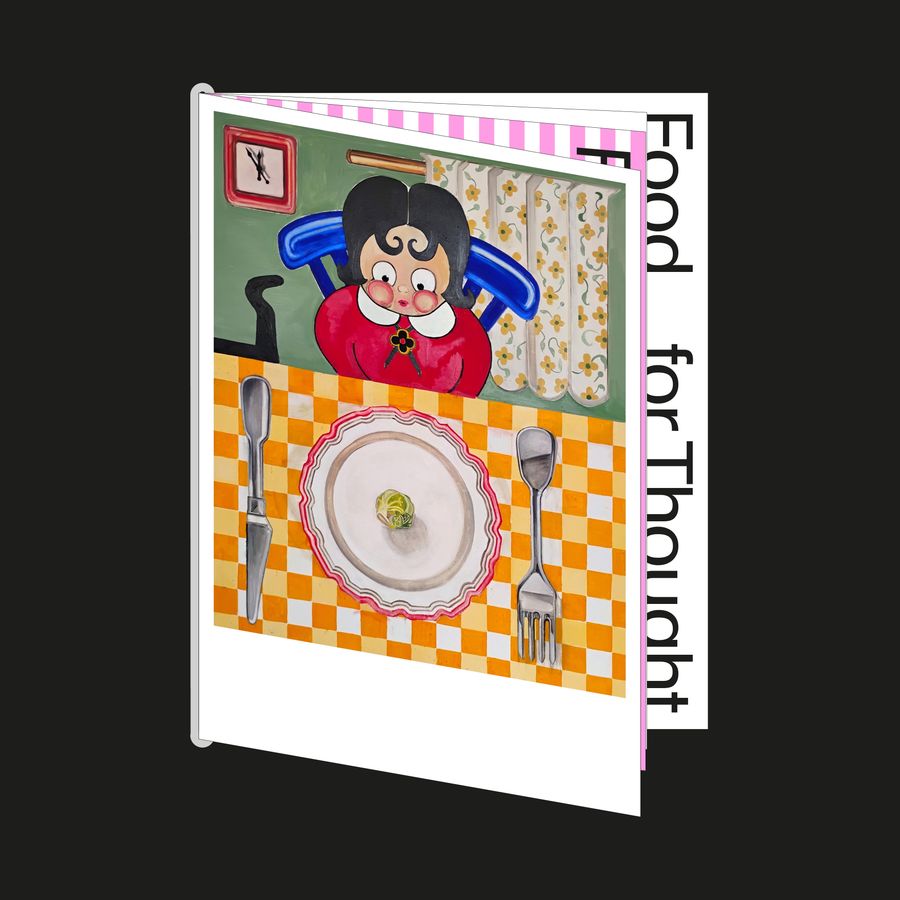
Ellen Dhondt presents her work ‘Picky Eating’ as part of the ‘Food for Thought’ series
Ellen Dhondt (°2000) grew up in De Kempen and studied painting at KASK in Ghent, where she graduated in 2024. From her interest in identity and societal norms, she developed Ellie Dolly, a cut-out doll with which she shares various traits and that appears as an alter ego in her paintings. Her visual language meanders between playful and uncomfortable. Often, it is personal experiences that serve as the starting point for her works, which simultaneously gain a broader societal significance. With Ellie Dolly, Dhondt explores the ways in which identity is continuously shaped by the environment, social expectations, and learned norms. Thus, Ellie becomes both a personal figure and a universal character. Behind the comedic and recognizable facade lies a critical question: to what extent do we determine who we are, and how much of that is determined for us?
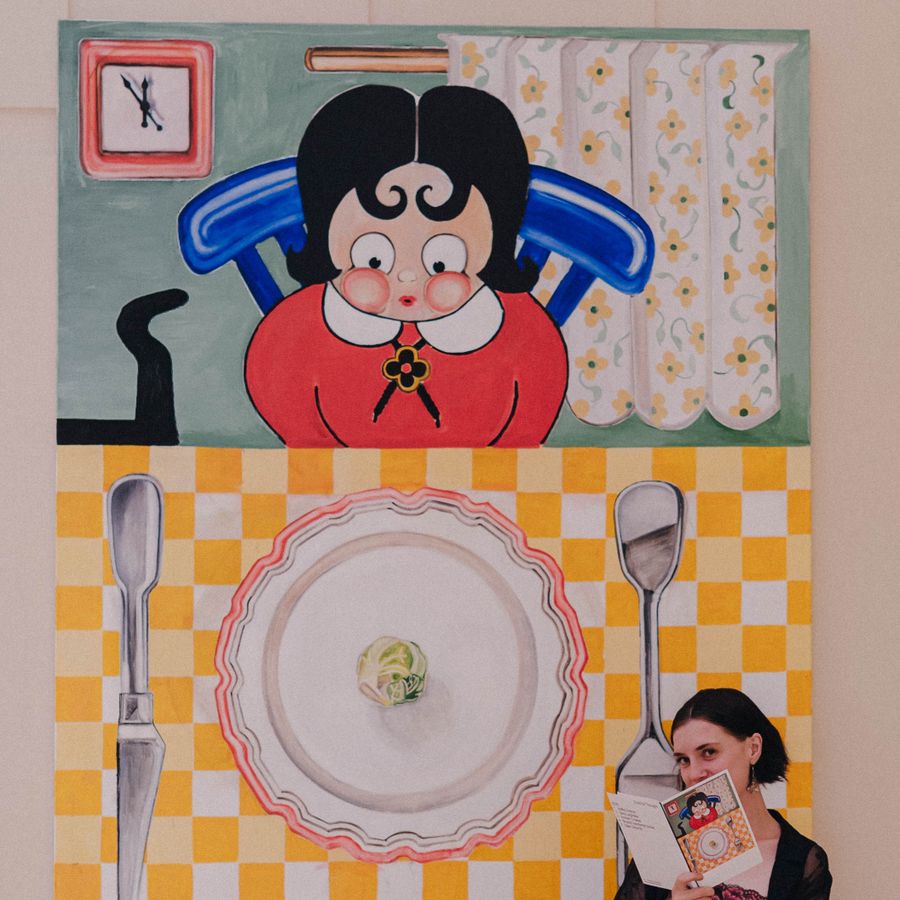
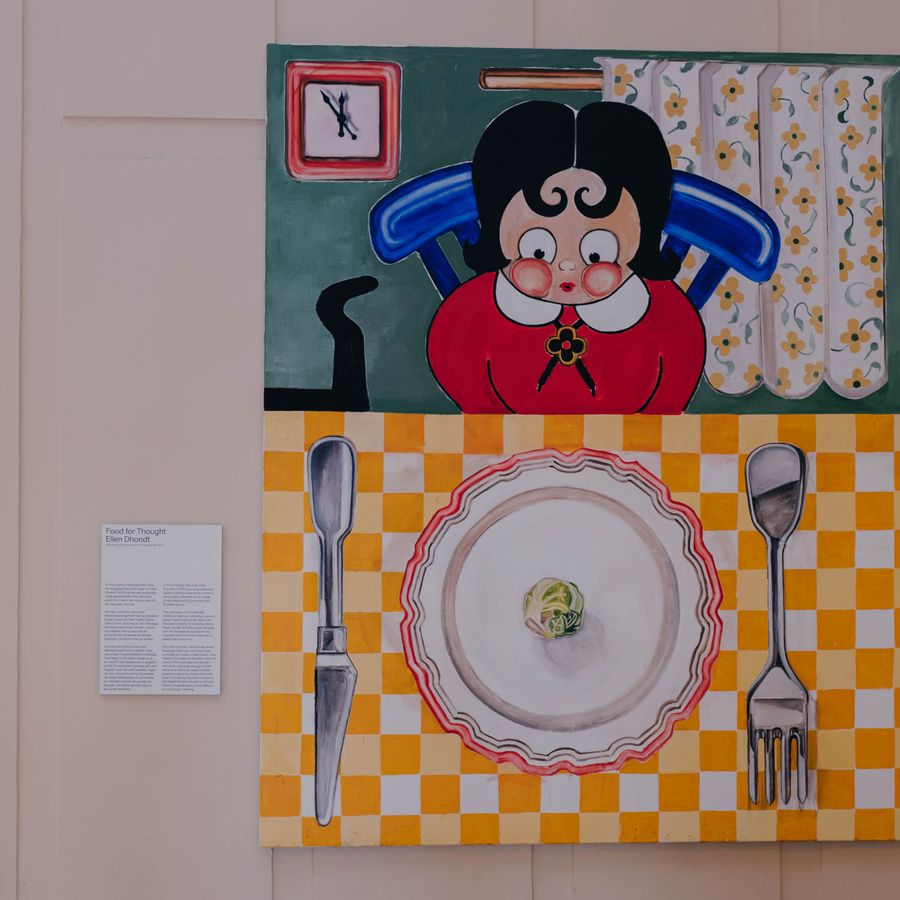
In ‘Picky Eating’ (2025), Ellie Dolly appears behind a seemingly cheerful table setting. In front of her is a large plate with only one lonely Brussels sprout in the center. The work originated from a recognizable childhood memory: refusing to eat but having to sit at the table until the plate is empty. The colorful, symmetrical composition and cartoon-like lines give the scene a cheerful quality, but beneath that apparent innocence lies a tension. How fragile is the balance between care and power? Who decides what is eaten, how much is enough, and when a child must obey? A seemingly innocent meal thus becomes a scene where control and autonomy stand in opposition to each other.
At the same time, the work opens up to a broader societal context. It touches on various eating issues, parenting questions, and themes such as consumption and unequal access to food. The vulnerability of our food supply also resonates in the image, especially in a time when drought and failed harvests increasingly put the availability of food under pressure.
The small Brussels sprout thus takes on a loaded meaning. It becomes both an object of resistance, a symbol of the yearning for control, and a reminder of how taken for granted we have come to find the availability of food.
Food is never just a personal matter. How, what, and even how much we eat is influenced by cultural norms, social expectations, and economic conditions.
VIERNULVIER invites a visual artist several times throughout the year to transform the menu into a saucy image with a touch of social criticism.