Food for Thought
Serving social commentary at VIERNULVIER Café
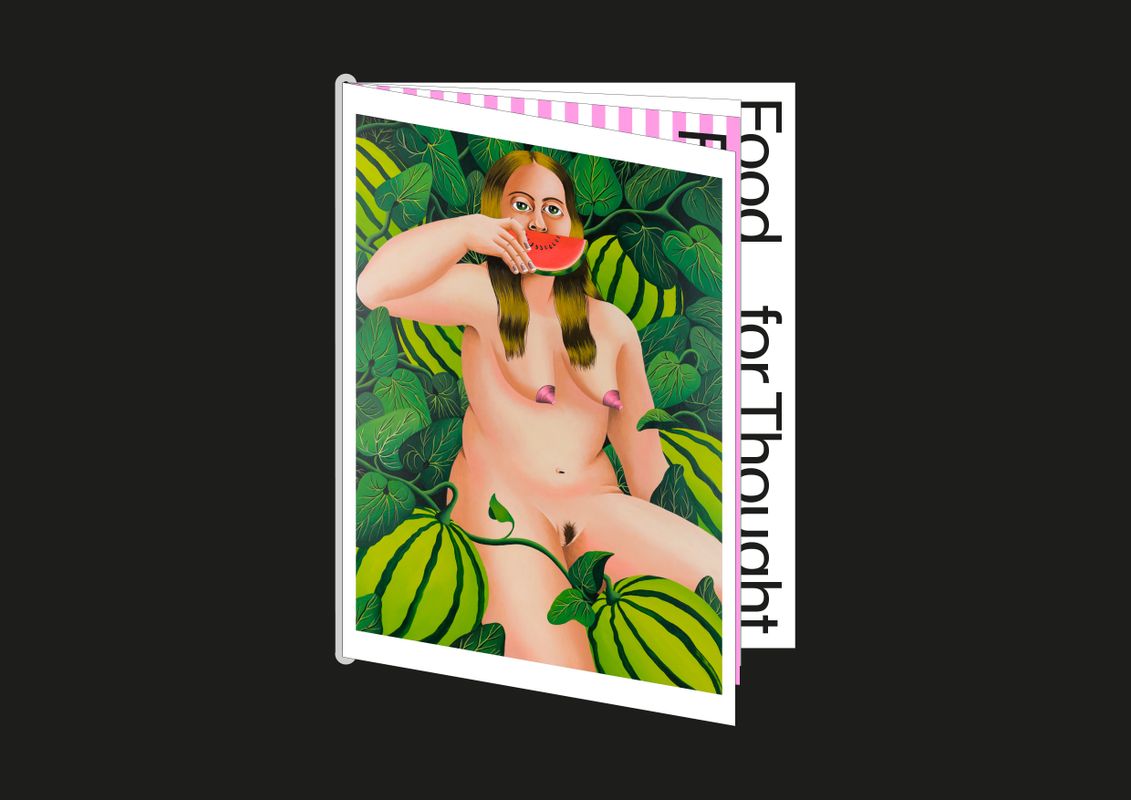
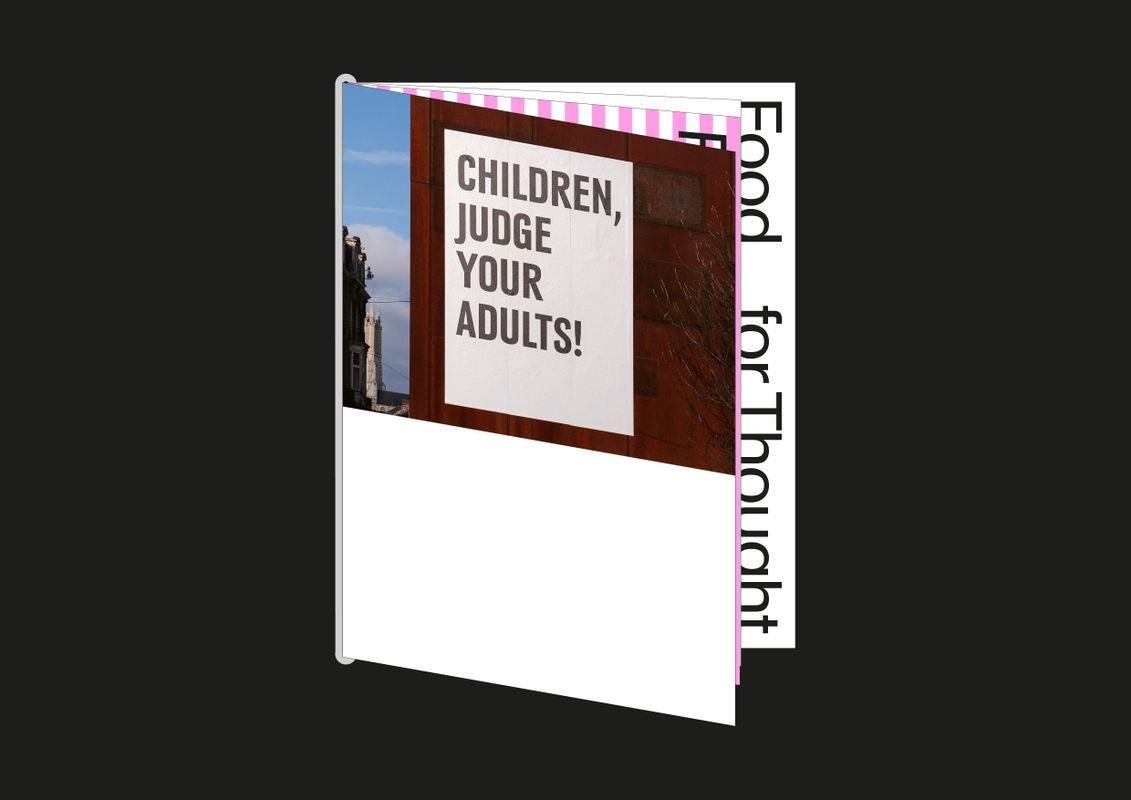
Every other month, VIERNULVIER invites a visual artist to serve up a saucy image on our menu. One that provokes, rubs people the wrong way and comes with a generous side of social commentary. With a pinch of humour, sweet imagination or a twist as sharp as a chef's knife, the works challenge cultural, political and social norms, inviting us to question the world around us.
At the VIERNULVIER Café, we don't just serve food, we also serve the art of critical thinking, the perfect appetizer for the many other art forms you'll discover in this house. Enjoy!
Want to claim a spot on our menu?
You can! Send an email with your pitch to our team at foodforthought@viernulvier.gent
We are looking for visual work, primarily free-form graphic work and painting. But text, sculpture and poetry are also welcome. As long as we can print it on an A5!
We’re curious about your wider artistic practice and happy to take the time to look through your portfolio. But if you’re responding to this open call, we ask you to select one work yourself that you think would fit our menu.
Social commentary + menu does not equal food waste!
Social critique goes beyond what’s on your plate. Food can be part of the picture, but it certainly doesn’t have to be the focus at all, we are welcoming all kinds of topics.
Fee
We offer a fee of €500. Your work will be featured as a reproduction on our café menu (A5) for one month, and will then be displayed as an A3 print in the entrance hall of De Vooruit for an extended period.
Criteria
- Your work is visual and/or visually compelling.
- Your work challenges social norms and/or invites us to think about the world we live in.
- Your work is printable and suitable for reproduction on an A5 menu.
- Your work catches the eye, lingers in the mind, challenges, surprises or raises a smile.
- You select one work from your practice that you feel fits the Food for Thought concept.
Does your work fit the bill? Then don’t hesitate to send an email to foodforthought@viernulvier.gent and introduce us to your work!
Participating artists and art
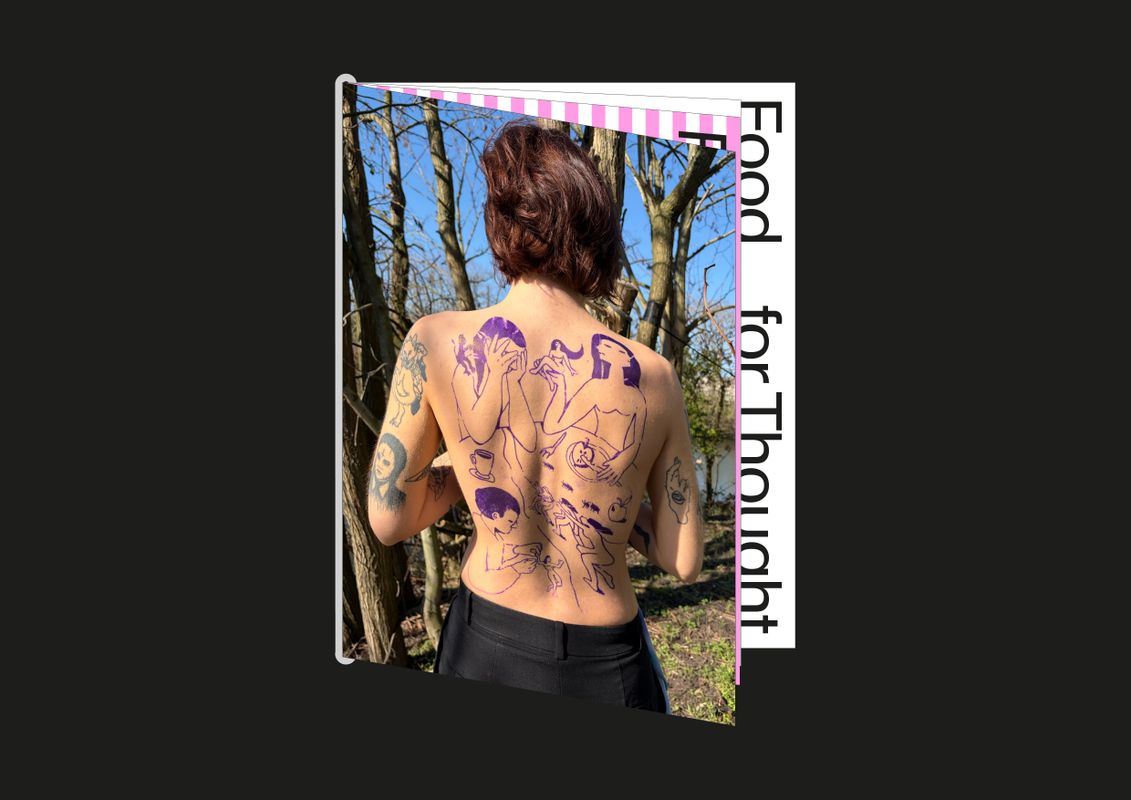
01. Joëlle Dubois (25 Nov – 26 Jan)
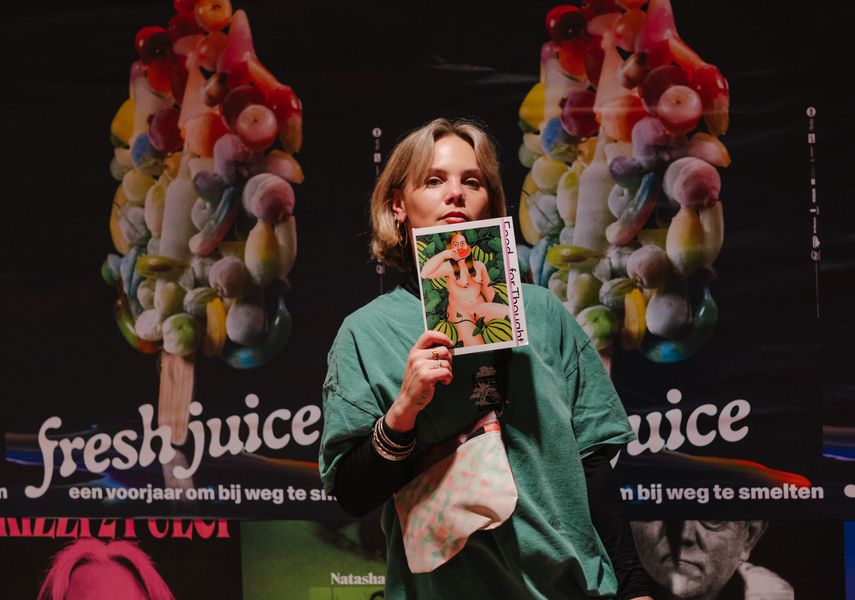
“Viva la Vida” (2023) is a signature work by the artist Joëlle Dubois. She focuses on the influence of social media on predominantly female users and explores the digital labyrinth that is intertwined with their real lives. Her paintings often depict women in vulnerable, unfiltered situations – half-naked, unshaven, in unflattering poses, their bodies unconsciously shaped by the images they consume. Even in social situations, they remain aloof, physically present but mentally elsewhere. This tension between hope, feminism, obsession, apathy, superficiality and authenticity encapsulates the confusion of the modern zeitgeist.
02. Sara Leghissa (26 Feb)
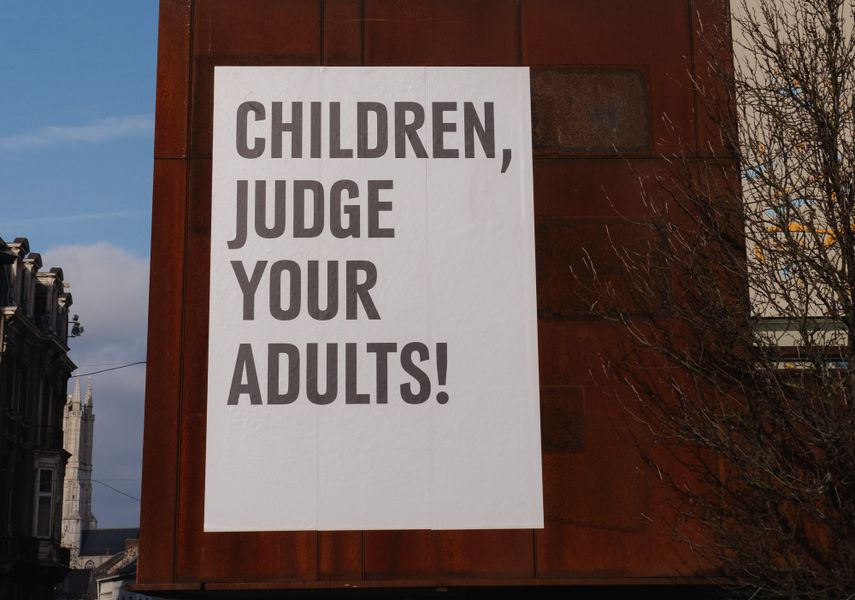
‘Children, judge your adults!’ is a metre-high magnet on the façade of the VIERNULVIER Café terrace. Facing the student neighbourhood, it serves as a daily reminder of the world for young people, and their adults. Sara Leghissa is an independent artist based in Italy. Their practice stems from a need for connection and transformation with contexts and people, and often takes a prominent place in public space with a poignant message.
03. KRAEY (Amber Craeye) (26 Mar – 26 May)
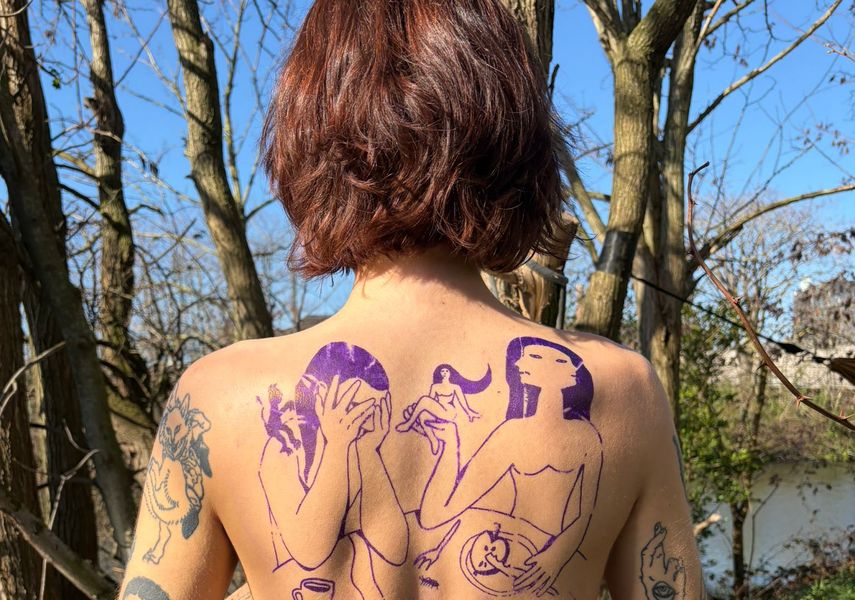
“What's a Girl To Do?” depicts a scene in which women are sitting together at a table. Various dynamics unfold within the scene: on one side, you see a man caressing a woman’s body, whilst on the other, a woman’s body is being praised. The work is a response to the amount of hatred women face today, and to the resulting sense of insecurity in society.
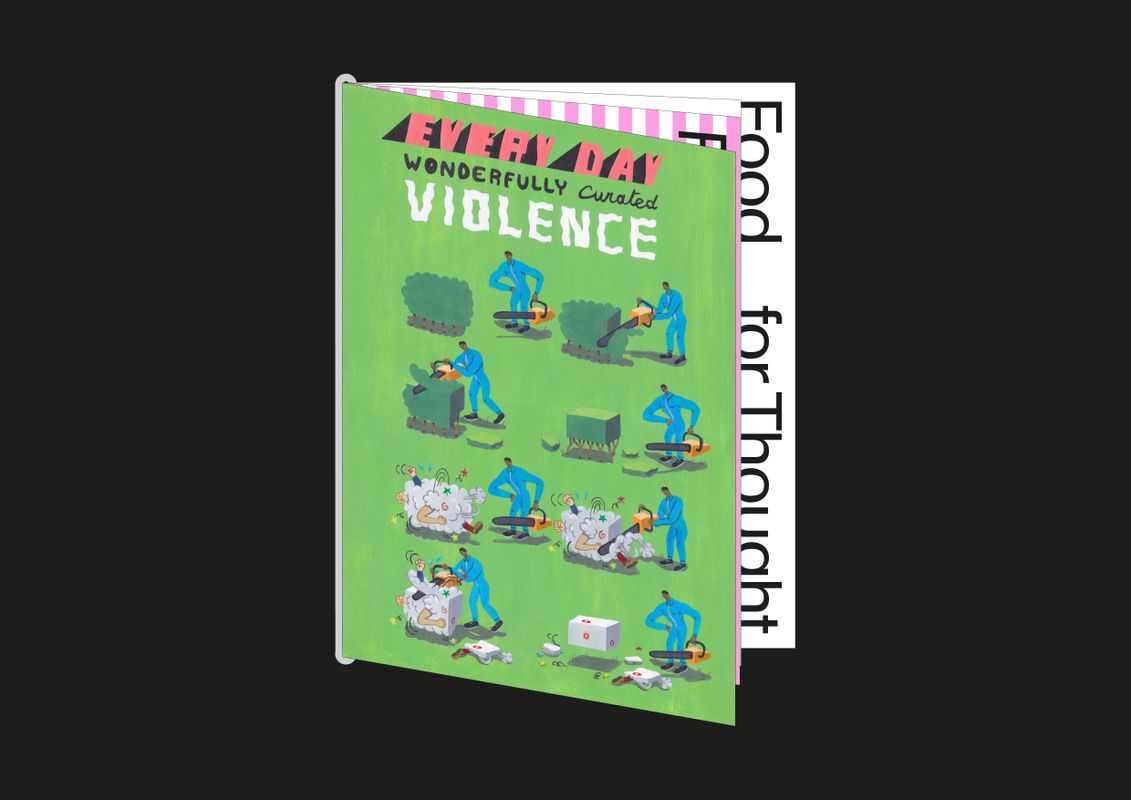
04. Brecht Vandenbroucke (26 May)
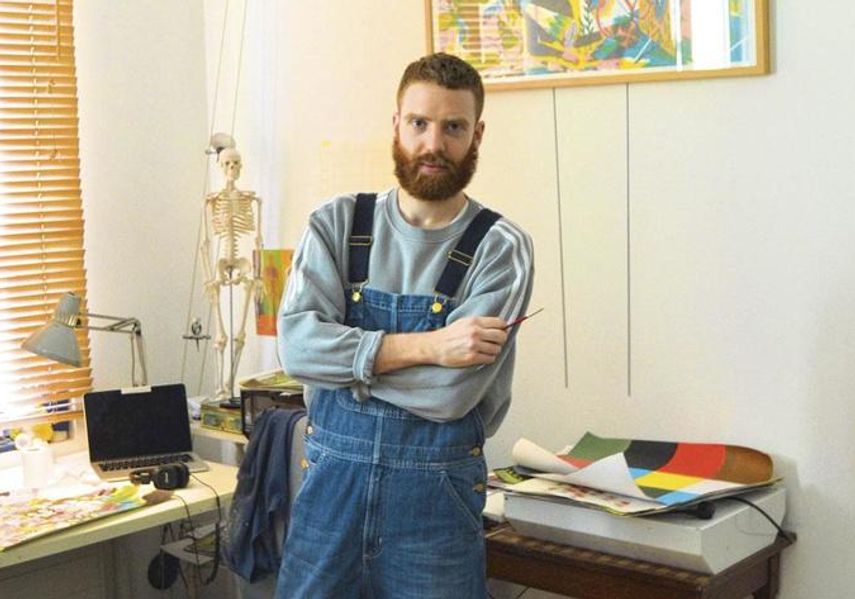
Visual artist Brecht Vandenbroucke graduated in Illustration at Luca Ghent and focuses mainly on painting, comics and illustration. He enjoys referencing pop culture, and draws inspiration from Disney cartoons and pop art. His work alternates between a comical and dark atmosphere and often focuses on themes such as alienation, art and modern technology. ‘Everyday Curated Violence’ is about how the universe behaves in a patterned way. It plays on "the tension between the inescapable tragicness of nature with its' violence and the way we shape culture."
05. Ellen Dhont (sep-oct 26)
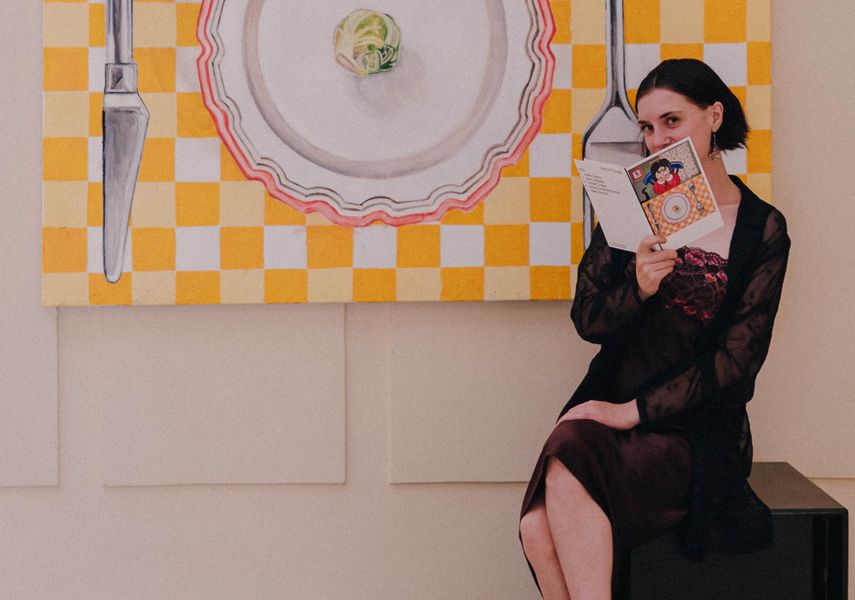
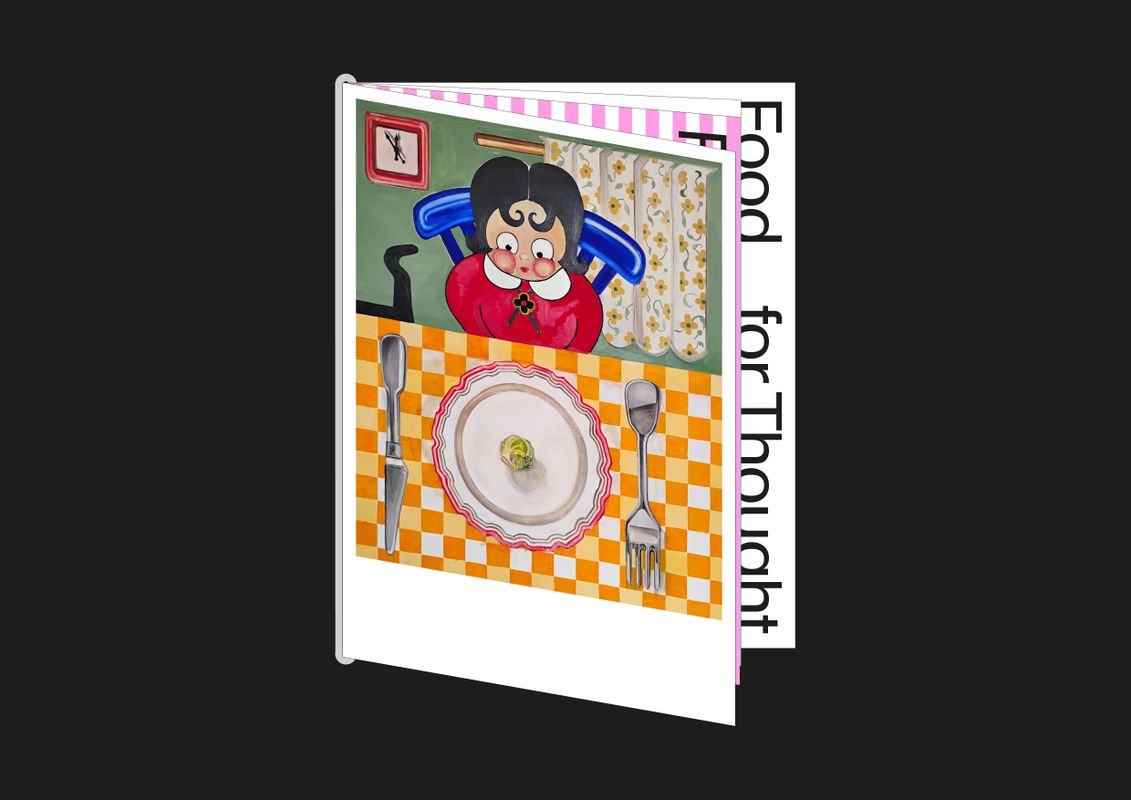
Ellen Dhondt (b. 2000) grew up in De Kempen and studied painting at KASK in Ghent, where she graduated in 2024. Drawing on her interest in identity and social norms, she created Ellie Dolly, a cut-out doll with whom she shares various traits and who appears as an alter ego in her paintings. Her visual language oscillates between playful and unsettling. Often, personal experiences serve as the starting point for her works, which simultaneously take on a broader, social significance.
In “Picky Eating” (2025), Ellie Dolly appears behind a seemingly cheerfully set table. In front of her stands a large plate with just a single, lonely Brussels sprout in the center. The work emerged from a familiar childhood memory: refusing to eat but having to stay at the table until the plate is empty. The colorful, symmetrical composition and comic-book-style lines lend the scene a cheerful air, but beneath that apparent innocence lies a tension. How fragile is the balance between care and power? Who decides what is eaten, how much is enough, and when a child must obey? A seemingly innocent meal thus becomes a scene in which control and autonomy are pitted against one another.
At the same time, the work opens up to a broader social context. It touches on a wide range of issues related to food, parenting, and themes such as consumption and unequal access to food. The vulnerability of our food supply also resonates in the work, especially at a time when droughts and crop failures are increasingly challenging the assumption that food is a given.
06. Antonino Triolo (nov 2026 - jan 2027)
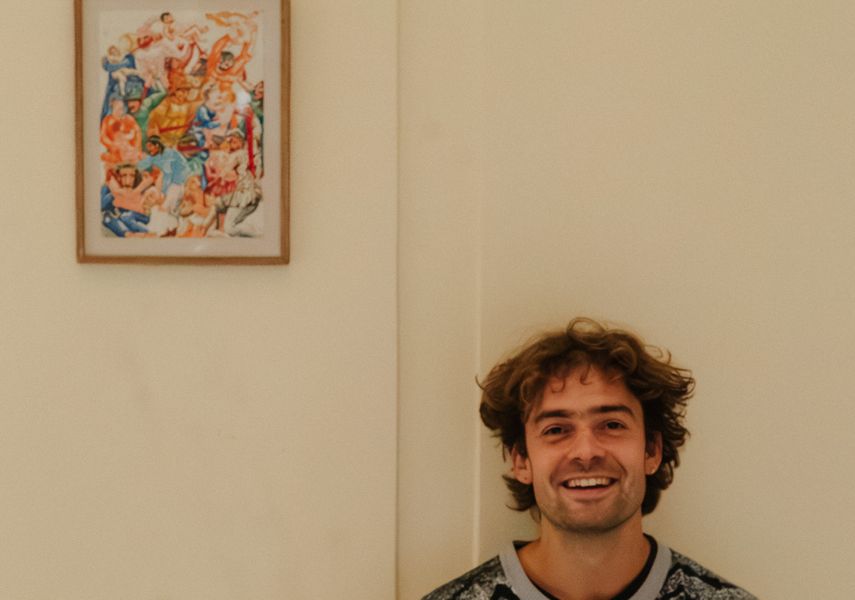
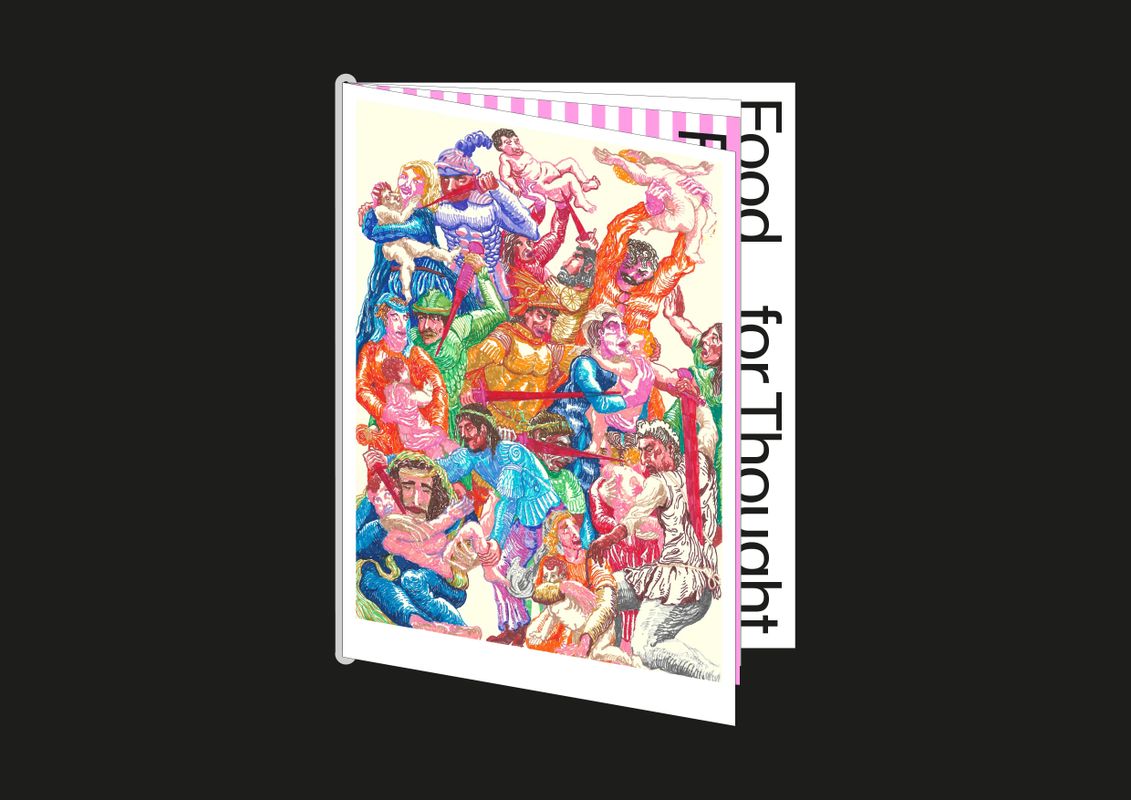
Antonino Triolo (b. 1999, Ghent) earned his Master’s degree in Fine Arts from LUCA School of Arts in Ghent in 2021. His multifaceted practice encompasses drawings, ceramics, and, on rare occasions, (culinary) performances. Folklore, Sicilian visual traditions, and stories from his second homeland, Italy, serve as major sources of inspiration. In his work, he interweaves personal elements with myths and anecdotes. This gives rise to an imaginative visual world in which history and fiction—as well as the dramatic, the religious, and the lighthearted—constantly collide.
For this work, Triolo draws inspiration from "The Massacre of the Innocents in Bethlehem" (1482) by Renaissance painter Matteo di Giovanni. Fascinated by historical paintings filled with dynamic figures, drama, and violence, he reworks the biblical scene into a vivid drawing in colored pencils. The title (i.e., "Eight Babies Being Executed at Exactly the Same Moment") describes violence in an almost matter-of-fact and absurd manner. This further heightens the contrast between the playful and the violent.
Behind the lighthearted composition lies a sharp social undertone. The biblical infanticide illustrates how innocent, vulnerable children fall victim to adults’ destructive lust for power. Unfortunately, this theme remains painfully relevant today: worldwide, children pay the price for political conflicts and wars over which they have absolutely no control. The image also evokes associations with refugee children who perish during their journey, such as the Syrian toddler Aylan Kurdi, whose body washed ashore on the Turkish coast in 2015, as well as with the large numbers of children who today fall victim to inhuman violence in Gaza and elsewhere. The work thus becomes an indictment of global child suffering in the broadest sense of the word.
07. ???
08. ???
09. ???
10. ???