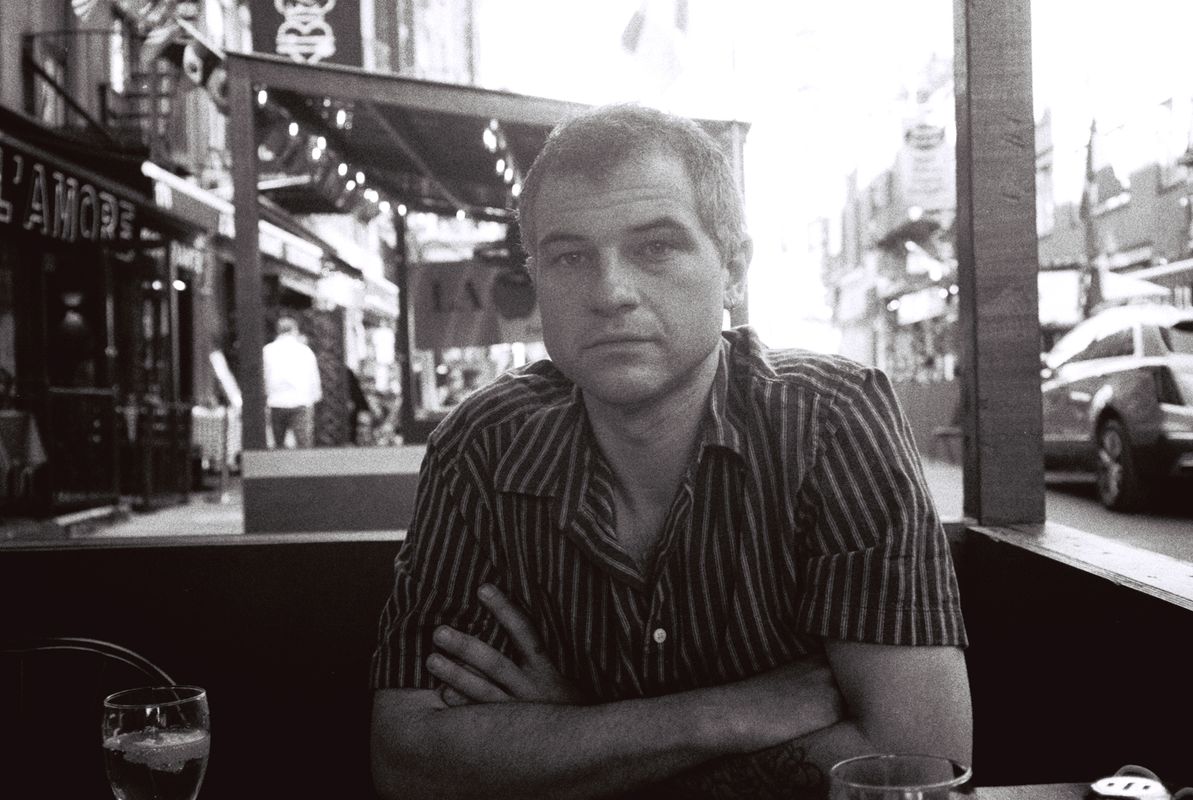
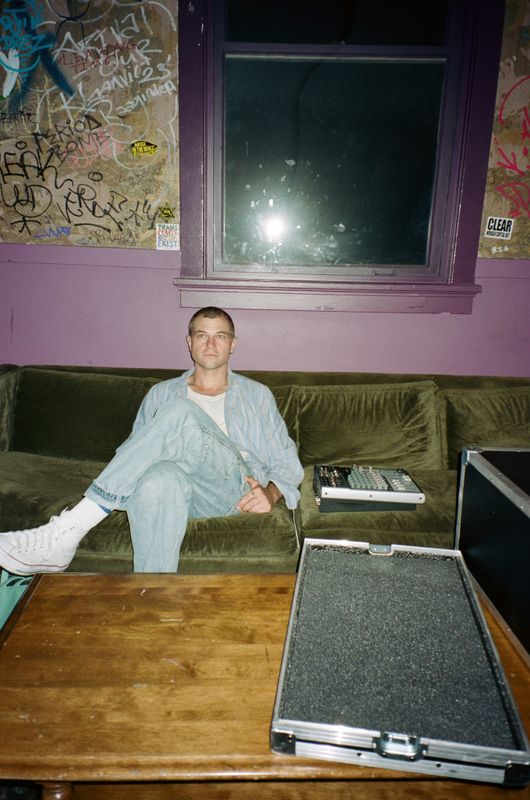
For a long time, Ryley Walker has occupied a particular place in the public imagination: an acclaimed songwriter and guitarist associated with folk music and one of the defining voices of a new generation of American songwriting. Yet the records themselves always hinted at a broader set of influences stemming from Walker’s background in Chicago’s noise and improvisational underground.
Following years of relentless recording and touring, Walker found himself at a creative impasse. ‘Darkening the Glass’ is Walker’s first collection of new songs since 2021’s ‘Course in Fable’. In that album’s wake, Walker’s musical practice faltered, with Walker coming vanishingly close to irreversible burnout. Looking for a way forward, he turned towards digital synthesis, laptop composition and Max/MSP, pulling apart old guitar recordings and unfinished sketches. Songs were detuned, resampled and rebuilt. The result is ‘Darkening the Glass’. Less a departure than a convergence, it brings together the many strands that have shaped Walker's work all along.
This new trajectory came about after an encounter with another album of boldly experimental songwriting (David Sylvian’s ‘Blemish’) which led him, in turn, to begin drawing inspiration from some of the computer musicians whose influence loomed large in the American noise underground of his early career: Peter Rehberg, Nobukazu Takemura, and Christian Fennesz. For a crash course in digital synthesis, Walker worked with Ben Kudler of Computer Music for Dorks and Radical Democracy to develop his own laptop practice, and soon marshalled a group of collaborators from across Chicago’s noise and improv scenes. From the roughened textures of a shared experimental arts lineage, the glittering shards of a new album began assembling themselves.
‘Darkening the Glass’ constitutes an album-wide embrace of extreme sonic contrasts: from looping guitar lines sharing space with skittering breakbeats (‘Service Weapon’) to subtly dialed-in acoustic expression ducking falling sheets of laptop noise (‘Cancer in Flowers’, ‘Marbles’); from cozy synth pads and shimmering live processing (‘Darkening the Glass’, ‘Ruined Paint’) to crystalline full-band interplay (‘Clouds of Beaujolais’) and the occasional yawning chasm of solo distortion (‘Wax Head’).
Across the divergent styles, Walker’s lyrics provide a welcome note of steadiness, combining hard-won self-possession with an acridly unsentimental wit to anchor even the album’s most outré musical spans in a kind of warm reflectivity. Indeed, though Walker’s releases have always been deceptively genre-agnostic, no one work of his has ever taken in such a broad swathe of musical reference points, used it to deliver such an unapologetically knife-edged intermixture, or done it with such inimitable individuality.