New work by Antonino Triolo for 'Food for Thought'
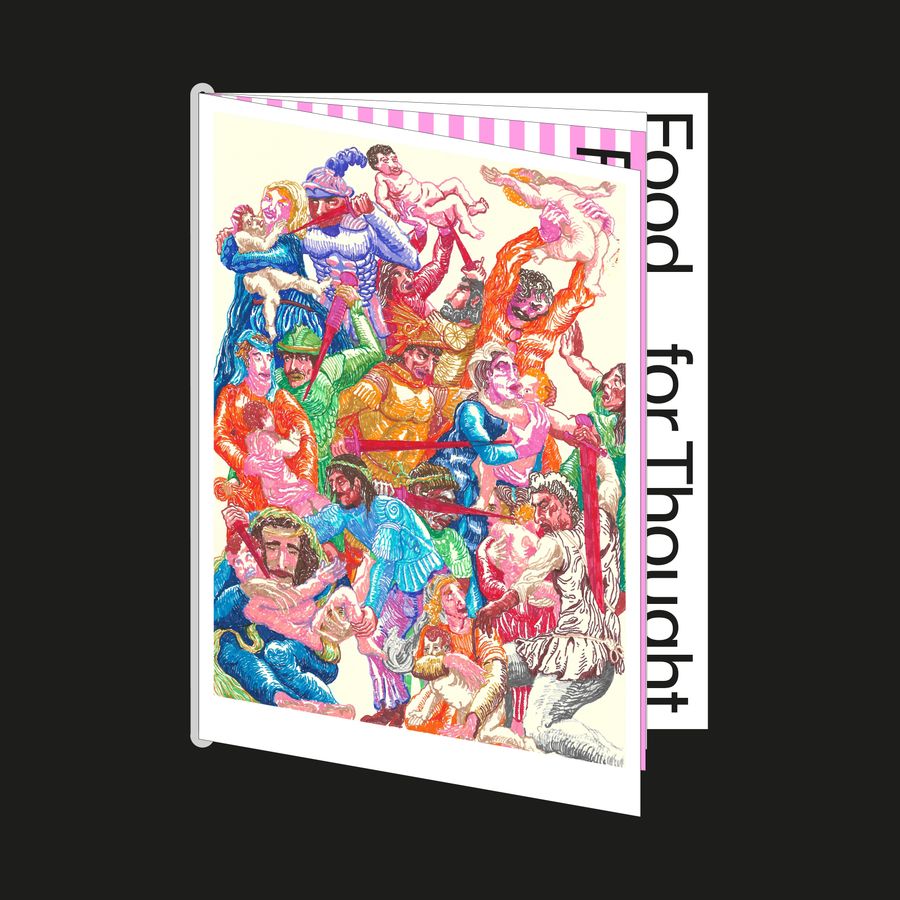
Every other month, Kunstencentrum VIERNULVIER invites a visual artist to cover the menu with a saucy image that stimulates, rubs against, and serves a hefty dose of social commentary: 'Food For Thought'.
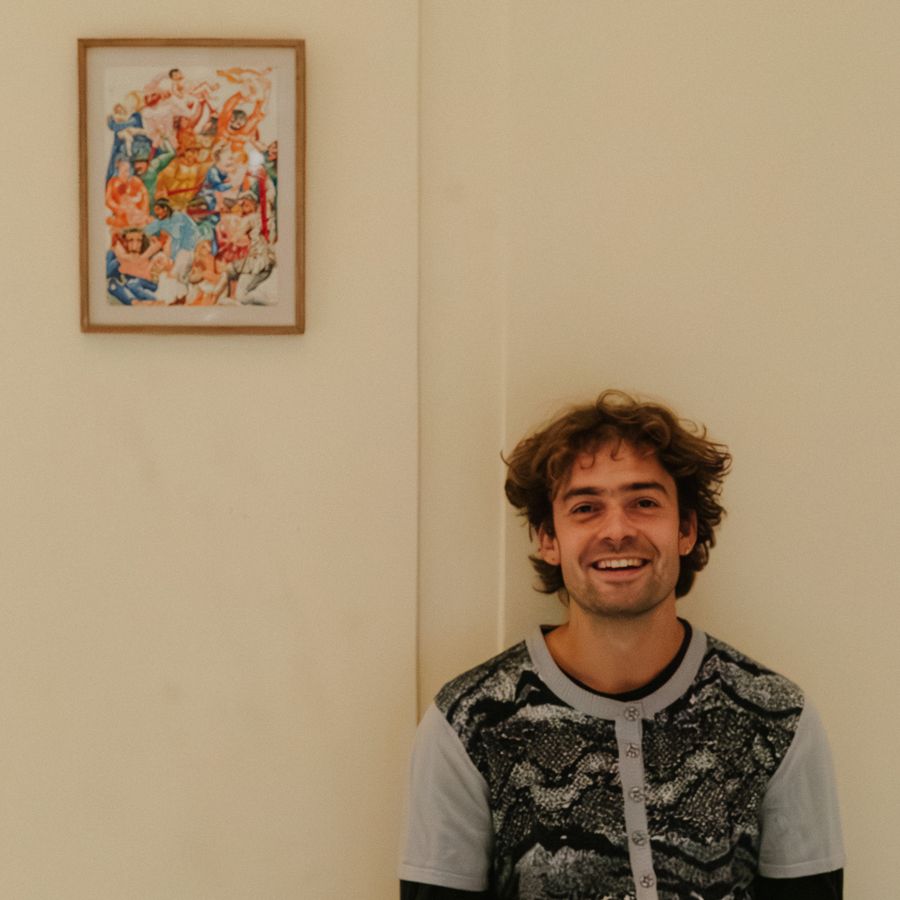
Antonino Triolo (b. 1999, Ghent) obtained his master's degree in Fine Arts from LUCA School of Arts in Ghent in 2021. His versatile practice includes drawings, ceramics, and exceptionally (culinary) performances. Folklore, Sicilian image traditions, and stories from his second home country, Italy, are significant sources of inspiration. In his work, he weaves personal elements with myths and anecdotes. This creates a fantastical visual world where history and fiction, the dramatic, the religious, and the light-hearted constantly collide.
For 'Eight Babies Being Executed at Exactly the Same Moment', Triolo starts from The Massacre of the Innocents (1482) by Renaissance painter Matteo di Giovanni. Fascinated by historical paintings filled with dynamic figures, drama, and violence, he reworks the biblical scene into a lively drawing in colored pencils. The title describes violence in an almost businesslike and absurd manner. This amplifies the contrast between the playful and the violent even further.
Behind the light-hearted composition lies a sharp social undertone. The biblical massacre shows how innocent, vulnerable children become victims of the destructive power lust of adults. Unfortunately, this theme remains painfully relevant: worldwide, children pay the price for political conflicts and wars over which they have no say. The image also evokes associations with refugee children who perish during their journeys, such as the Syrian toddler Aylan Kurdi, who washed ashore on the Turkish coast in 2015, as well as the large numbers of children who today fall victim to inhumane violence in Gaza and elsewhere. Thus, the work becomes an indictment against global child suffering in the broadest sense of the word.
The work confronts the viewer with the harsh reality behind an apparently playful presentation. Antonino not only makes the past visible again in this way but also brings it into the present. Through the combination of historical imagery, humor, and social criticism, he invites us to reflect on the repetition of human violence throughout history. Thus, the drawing becomes more than a reinterpretation of a biblical scene: it holds up a mirror to us and poses the question of how much has really changed.